
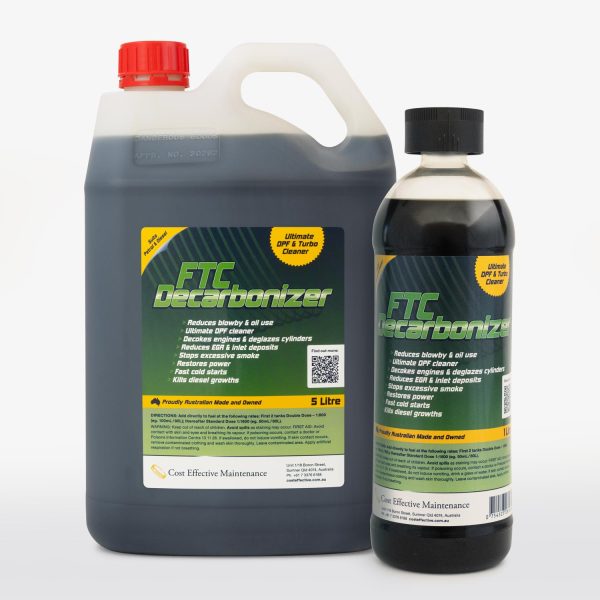
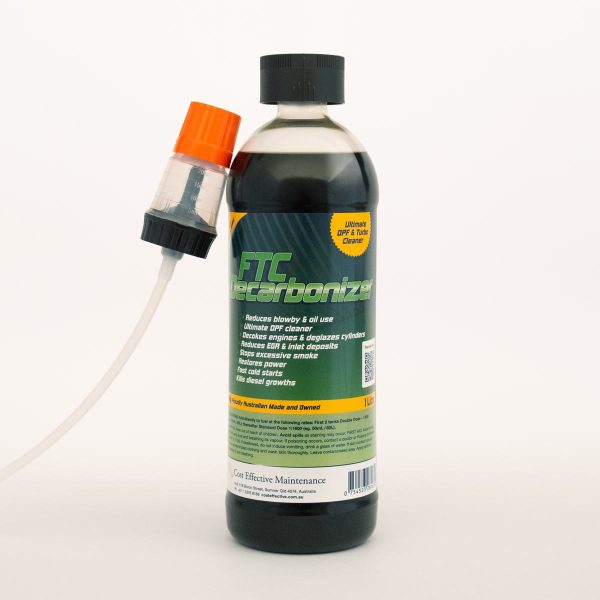
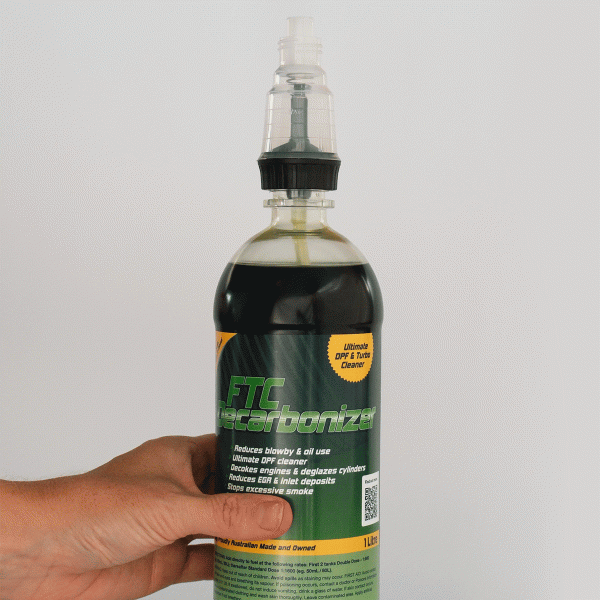
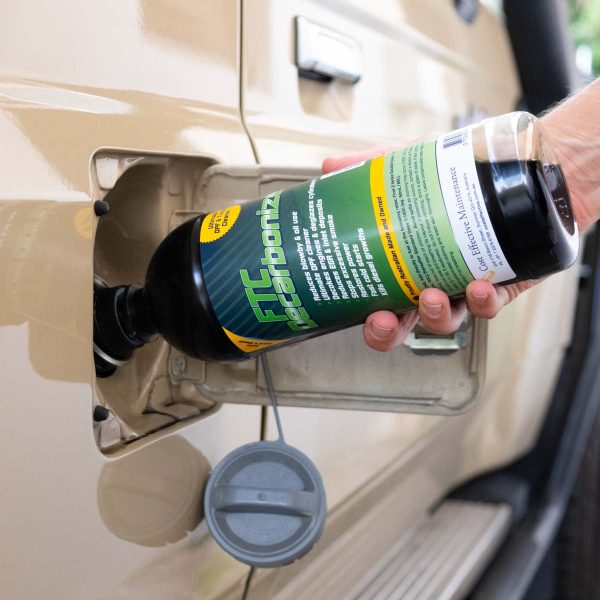
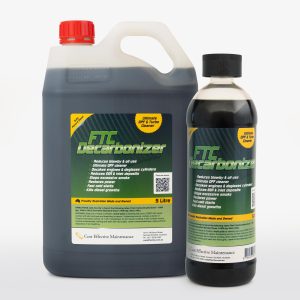
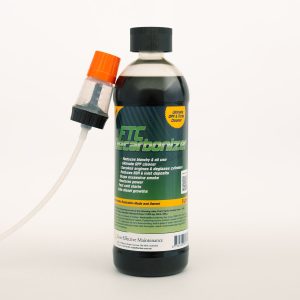
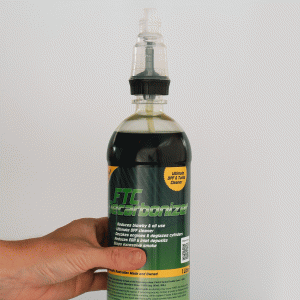
FTC Diesel Decarbonizer
From $135.00 incl. GST
FTC Decarbonizer acts as a combustion catalyst, burning carbon out of combustion and exhaust spaces, turbos and DPF filters. Fuel burns faster, easier and cleaner — for better fuel consumption and engine efficiency. Suitable for petrol and diesel engines, it delivers:
-
- 25% longer engine life
- Restored power and economy, with less smoke
- Reduced oil use and blowby
- Deglazed, de-coked engines and fast cold starts
- Clean diesel particulate filters and longer turbocharger life
- Killed diesel fuel growths and reduced harmful emissions

- Description
- Reviews (393)
- Dosage
- Comparison
- Example
- Case Studies
- Frequently Asked Questions
- ASTM Testing
- MSDS / Product Download
Description
FTC Decarbonizer is a diesel decarbonizer and combustion catalyst that burns carbon and cylinder glaze from the combustion and exhaust system. It restores power and economy, cuts smoke and blowby, speeds cold starts, and keeps DPFs, EGRs and turbos clean. It suits diesel and petrol engines. One litre treats 1,600 litres of diesel.
The FTC Decarbonizer diesel decarbonizer is a fuel-borne combustion catalyst. It makes fuel burn faster, cleaner and more completely. As a result, it removes carbon build-up and cylinder glaze from the combustion and exhaust spaces. It also keeps turbos, EGRs, catalytic converters and DPFs clean.
Carbon builds up when an engine does not work hard enough. For example, short runs, light loads, idling and cool running all cause it. Because the deposits foul the engine, you get smoke, glazing, power loss and hard starting.
The FTC Decarbonizer diesel decarbonizer treats the cause, not the symptom. In addition, there is no need to force a DPF regeneration or physically clean the filter. It safely burns off hard carbon and glaze instead.
- Diesel smoke, glazing or blowby
- Power loss and poor economy
- Hard or slow cold starts
- Keeping DPFs, EGRs and turbos clean
It suits trucks, boats, 4x4s, cars, earthmovers, farm machinery and small two- and four-stroke engines. One litre treats 1,600 litres of diesel. Choose the FTC Decarbonizer diesel decarbonizer to clean your engine and restore lost performance.
For engines with established blowby, pair it with Flushing Oil Concentrate as our two-step treatment — around 80% of treated engines recover compression control and eliminate blowby.
Engine decarbonisation that restores performance
FTC Decarbonizer burns fuel faster and cleaner and removes build-up from the combustion and exhaust spaces. It has prevented thousands of engine failures, rejuvenated performance and economy, extended engine life by 25% — and in some cases more — and helped keep sensors and emission-control equipment free of deposits.
One customer runs a Mitsubishi FP418 truck and first bought the diesel decarbonizer after suspected glazing in a rebuilt engine (from light loads and cold conditions). The engine was down on power and billowed white smoke. Within six hours of using FTC the white smoke was gone and power improved — and the customer saved about $1,000 on diesel for every 5L bottle.
A cost-effective fix for glaze and carbon
FTC Decarbonizer is a real-life fix for cylinder glaze and carbon build-up in the combustion and exhaust spaces, including turbochargers, catalytic converters and diesel particulate filters. You do not need to force a DPF regeneration — it works on the cause, safely burning off cylinder glaze and hard carbon.
- Suits trucks, boats, 4x4s, cars, earthmovers, farm machinery and small 2- and 4-stroke petrol engines
- Deglazes and decokes engines; reduces smoke and improves emissions
- Keeps EGRs, catalytic converters, DPFs and exhaust sensors clean — no forced regenerations or manual DPF cleaning
- Restores power and economy; speeds combustion for more power from the same fuel
- Fast cold starts; reduces blowby and oil use
- 1L treats 1,600L of diesel
Customers have saved or postponed rebuilds on engines with smoke issues costing from $4,000 to $500,000.
Effective cylinder deglazer
Carbon builds up when an engine does not work hard or long enough — short runs, light loads, excess idling, cool operating temperatures, poor fuel quality or poor maintenance. It shows up as diesel smoke, glazing, poor economy, power loss, hard starting, blowby and fuel growths.
FTC Decarbonizer safely burns off build-up in the combustion and exhaust spaces, leaving the engine free of hard carbon.


393 reviews for FTC Diesel Decarbonizer
Add a review
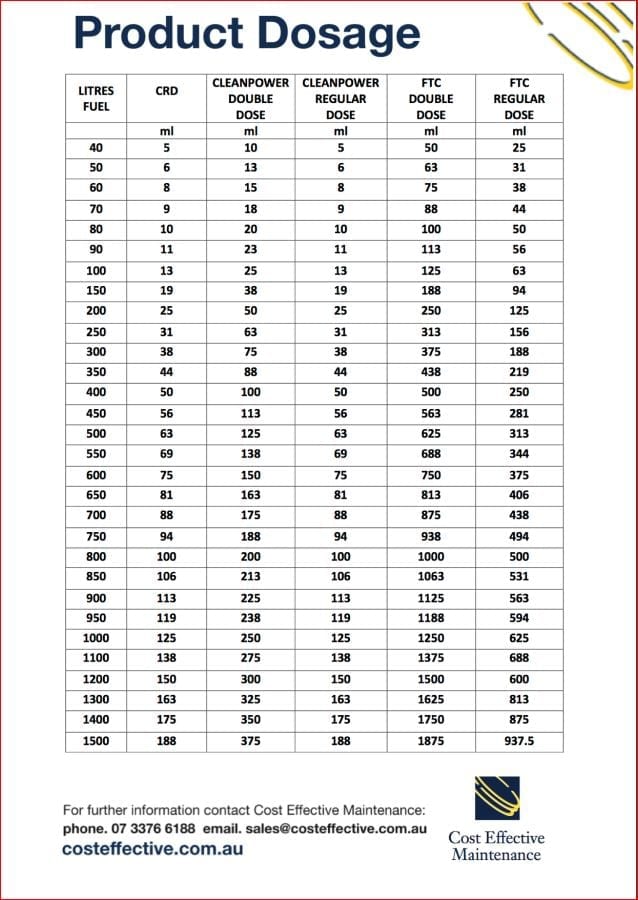
How much FTC Decarbonizer will my vehicle need?
- 4WD / Small truck 1 ltr
- Tippers / Trucks / Boats 5Ltr
- Larger or fleet use — 20L or 200L FTC
- Double Dose is recommend for intital usage
Double Dose: 1L of FTC to 800L of Fuel.
Regular Dose: 1L of FTC to 1600L of Fuel.
May not be suitable for some older, worn petrol engines.
No FTC used vs FTC treated — same engines, side by side
No FTC used
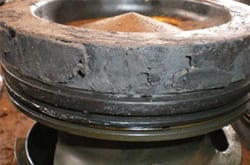
Very heavy carbon deposits have built up on the piston top land. The consequences are that the carbon will wear away the cylinder cross hatching AND/OR cause the piston to grab the liner
FTC treated
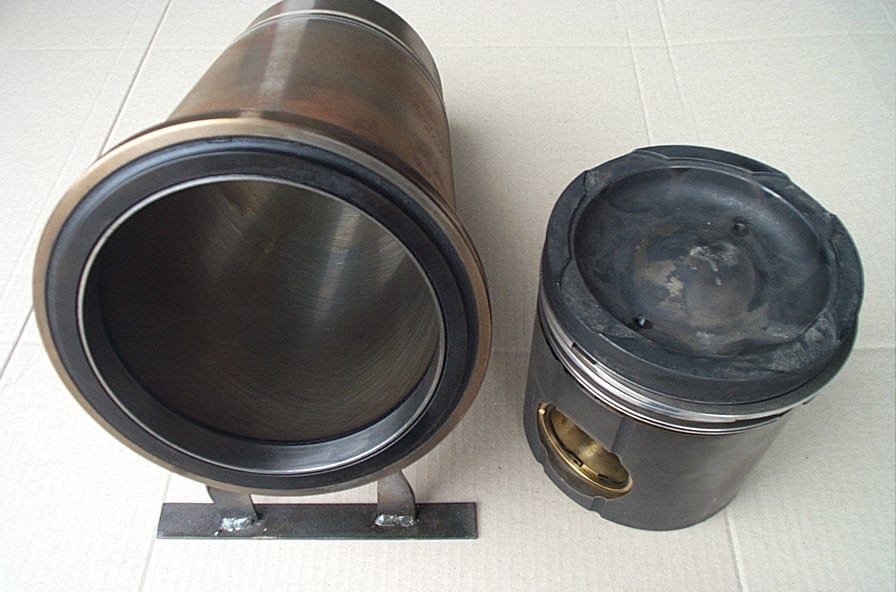
23,000hrs life with very little wear! The cross hatch is fully intact, with way under 1 thou wear…fully reusable! Only 25% wear on piston ring faces! How to stop diesel smoke? FTC burns the fuel cleaner, and also burns away any existing carbon build up. So deposits do not build up and prevents engine glazing.
No FTC used
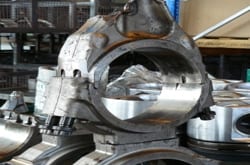
Here the piston grabbed the liner…catastrophic results. The conrod broke, which also destroyed the whole block. It had to be thrown away instead of a rebuild.
For this engine, a rebuild costs around $1/4 million. Add the cost of a block, conrod and damaged parts, and you’ve got a very expensive exercise!!
You can’t pre-book a rebuild on a failure & it’ll take an extra 2 weeks in the queue. Lost mine production could cost an extra $460,000 for this unplanned event!
FTC treated
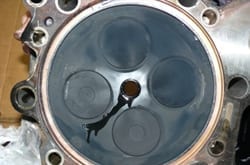
Cylinder head as removed. (That’s a little oil weeping out the injector hole.) That carbon is so soft, it can be wiped off with a rag to expose shiny metal.
Not only do combustion and exhaust spaces stay cleaner, but the oil quality is also much cleaner, because…
Cleaner combustion produces less soot. Cleaner piston rings minimise contaminant blowby into the oil.
No FTC used
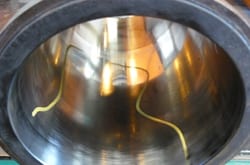
The area marked is totally devoid of cross hatch. Those piston deposits “polished the bore”, totally wearing away the machined cross hatch, causing blowby, smoke, oil use, power loss and an early rebuild!
FTC treated
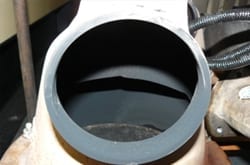
With a cleaner burn due to FTC use, just look how clean the exhaust system is! Unlike untreated engines, it does not look jet black…rather dark grey with a drier look!
No FTC used
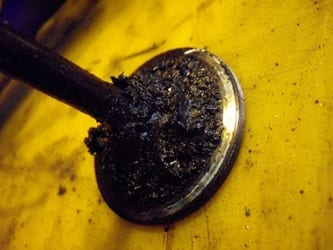
Here we have another expensive problem waiting for the owner. Without an effective engine carbon cleaner the carbon build up on this exhaust valve has started to cause the valve face to burn & pit. It will also reduce valve guide clearance, which may cause fatigue and a dropped valve…
FTC treated
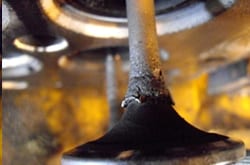
The FTC burn ensures that there is no problem with this valve from the same application and engine type as on the left. No valve pitting and no compression leak! With FTC decarbonizer it’s not likely to break either.
No FTC used
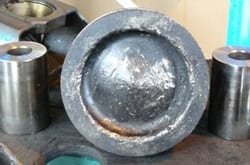
In this instance the valve did drop, and hammered the cylinder head and piston. How much further damage happens only depends on how quickly the engine is shut down…expensive!
FTC treated
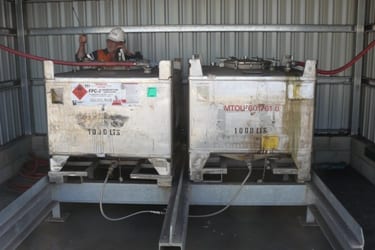
Apart from carbon control, FTC produces fuel efficiencies of 5-10%. CEM supplies large open cut mining operations, and this lot will treat 20 million litres of diesel for their hard working mobile fleets. They’ll save several $million a year!
Example: HiAce 2.8L diesel always loaded to 3.2 tonnes
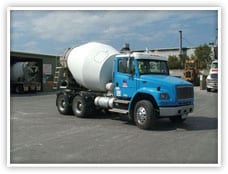
Mechanic, and owner of well known company, 4M Maintenance Systems, Michael Corbin, reported that at 300,000kms, his HiAce engine lost “approximately 50% of its power, started smoking badly, used oil, was missing on one cylinder and pinging.” The cause was found to be a collapsed exhaust pipe flexible link, which had caused gross carboning up internally.
By all indications it would need rebuilding. But as a last resort, Michael tried FTC Decarbonizer in the fuel, and with just 1 weeks running, the engine was operating perfectly again…full power, no pinging, missing, smoke or oil burning! Michael always used a fuel additive, but this was not able to remove the built up carbon. Only FTC Decarbonizer was able to provide the solution, and as a mechanic, Michael is both amazed and delighted!
Common applications
Most pleasure boats, site tippers, crane trucks and concrete trucks, but lots more, too.
FTC is an engine carbon cleaner and is ideal for running in new engines, and will also kill all diesel fuel growths. How many boating tragedies have been put down to fuel problems, and power loss? The big risk is, if you have fuel growths, it just takes a bit of rough water to stir them up and block fuel filters. You lose power at the time you need it most! Four wheel drivers and remote area travellers can face similar risks, and rough roads can quickly stir up tank bottoms and block fuel filters. Don’t allow fuel growths to proliferate. Use FTC! It’s toxic to all fuel growths.

Low sulphur diesel and fuel pump leaks
The recent introduction of low sulphur diesel has resulted in many diesel fuel pumps starting to leak. This occurs as a result of reducing the aromatic content of the diesel. Seals shrink as this occurs and if they have a bit of age, may develop cracks and leak. FTC increases the aromatic content of diesel by 500ppm, and reduces the incidence of pump leakage. It will assist in preventing seal leaks caused by reducing the sulphur. Seals that have started to leak, may not necessarily take up due to cracking.
FTC is dead easy to use
Simply add it to the fuel each fill (mix rate 1:1600, double dose first) and drive your engine clean. There’s no down time at all.
Fuel efficiency and Greenhouse Gas reductions
FTC Decarbonizer achieves a faster fuel burn by creating a multiple flame front development, so will provide a fuel efficiency benefit even in new engines. The major part of CEM’s business is supplying energy savings and Greenhouse Gas (GHG) reductions for large open cut mining operations. This involves high cost, scientifically controlled and carefully monitored field trials to provide statistical validation. For every tonne of diesel burnt, three tonnes of carbon dioxide are produced! Large mining houses are committed to minimising their GHG outputs, so it really is a win-win solution.
The high cost of such trials makes it uneconomical for us to provide this service to smaller operations, and until now, we have not promoted fuel cost reductions very strongly. However, our environmental commitment is a high priority (Our current GHG reduction is equivalent to removing 5000 cars from our roads), and it would be negligent not to promote this important benefit, at such a critical time in the escalating Greenhouse problem.
Imagine if worldwide we could cut GHG emissions by 7% (through this and other initiatives), how much breathing space would that give us to implement clean energy technologies to replace fossil fuels?
Typical fleet average figures for mine mobile and highway trucks is 6–8% fuel saving. However, when combined with decarbonizing a dirty engine, the fuel saving benefit can be much more. It really depends on how much efficiency has been lost. e.g. an 800HP Caterpillar driving a 3 metre tub grinder recently reduced fuel use from 150L/hr to 93L/hr. That’s clearly a function of RESTORING LOST EFFICIENCY.
Nissan Patrol 2011
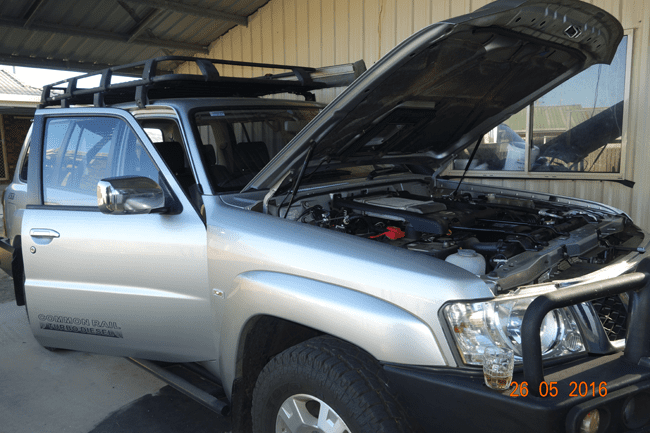
The FTC Decarbonizer worked like magic. I had travelled about 1000Km’s when the effect became obvious, since I only do short trips. The smoking of the engine has disappeared and it purrs like a kitten. George Csepregi Innes Park Qld.
Ford Territory 2.7L 2011

I purchased the FTC Decarbonizer to save on an expensive repair to get my Ford Territory’s power back. After using FTC Decarbonizer at recommend doses in just two weeks I felt the cars power return, fuel economy fell from 9.01.to 8.97 and exhaust black smoke nearly gone. This is from a diesel that has only just gone past the 100,000 kms. So if this is the indication of success in your products count me in . You saved me hundreds of dollars I didn’t want to part with. Keep up the good work, Russell Whiffin Jimboomba Qld.
Nissan Patrol 2.8 1995
So after having my 2.8 RD engine rebuilt in my 1995 Patrol, much to my horror I had Blowby. This was due to me using an oil that was too good hence the rings did not bed in correctly. I used your FTC Decarbonizer and used twice the recommended dose and also towed a nice heavy load for approx 200kms. I am happy to report my Blowby issues are virtually non existent. To me the FTC Decarbonizer was a get put of jail free card saving me on a costly engine teardown for a rehone. I would recommend your products to anyone. Reason being they actually work. Paul Mays. Wagin WA
Toyota Hilux TD
Hi. Just sending through my results using the FTC Decarboniser. It was recommended to me by my uncle for my TD Toyota Hilux due to lack of performance and poor economy. This was also after we had a look inside the throttle intake and saw that the EGR had a decent amount of build up. It’s been about a month of using the product and the car feel very different to drive. It’s smooth, it’s got more torque and doesn’t sound like its struggling when the car is revved out. I’m really happy with the difference and I’m glad to have finally found a product that works. Paul.
Deglazing & decoking my diesel powered boat.
Hi again Nelson, just thought I should let you know how chuffed I was with Nelson’s Marine & the FTC Decarbonizer I purchased! Not only was the product a fantastic success but your professional advice & service could not be faulted. The item arrived in record time so I could begin the process of deglazing & decoking my diesel powered boat very quickly! Within a few fishing trips the white smoke disappeared & power was restored. THANKS HEAPS NELSON !!!! CHEERS Rod – from Nelsons Marine
www.nelsonsmarine.com.au
Bob’s old Discovery
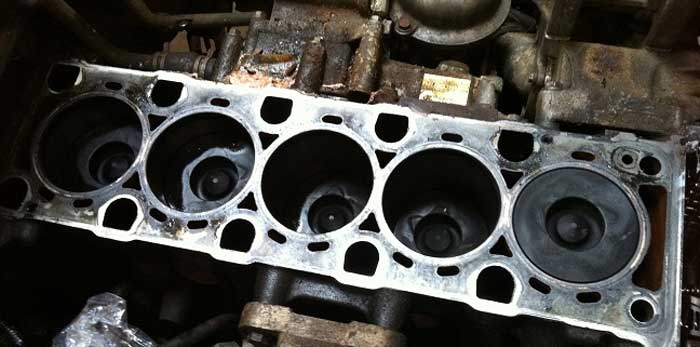
Bob has been using the FTC Decarbonizer in his old discovery for several years now here is a photo with the head off. His mechanic was amazed at how clean the pistons were . Regards Bob . NQ
Cummins 444 in Kenworth T650
Maslin Bros Pty Ltd used this Kenworth daily on a contract with a Mt Isa minesite. The truck lost power and started smoking so badly, that it was not allowed back on site. The local Cummins dealer told Hugh Maslin that there was way too much blowby, and it would need rebuilding at $32,000!!! Instead, Hugh tried FTC Decarbonizer and Flushing Oil Concentrate. He was absolutely amazed at how much rubbish came out on the flush. After the treatments, the Kenworth went back to work, for the remaining 18 months of the contract…with no smoke and no oil usage!! Two years later, and the Kenworth shows no signs of deterioration. Hugh had saved the business a $32,000 rebuild, didn’t lose any downtime, and kept his client happy.
Detroit Series 60
Merv Sweetman had 500,000km on the engine with no problems, then it suddenly started fuming badly, and went to 6-7 L in 2 days. Detroit people said it needed a rebuild at $14,000. He started using FTC Decarbonizer and Flushing Oil Concentrate. Now 400,000 km later, the truck is still running better than ever and no oil consumption. His Caterpillar engines are also running better, and the oil in them stays very clean right to the change interval.
Detroit 6V92 on School Bus Run. (Tasmania – Ron)
The bus does a 130km daily run picking up & dropping off school kids. The engine was reconditioned 800,000kms ago, by the previous owner. At 1400 rpm, it really lacked torque. After using FTC Decarbonizer it now pulls well from as low as 1100 rpm, and is 1 gear higher on hills.
Mercedes Benz 300D (1989)
You’ll laugh, Jimmy…Last Thursday I picked up the Mercedes 300D I bought online and took some of your magic FTC Decarbonizer and Cleanpower fuel conditioner with me, having been told that the engine was a bit smokey and lacked power.
I stopped to top up with fuel and put 40ml of FTC and 20ml Cleanpower in the tank, then headed across town for the Hume Highway back to Collector (near Canberra). Well, a bit of smoke..my god there were plumes of blue smoke so thick that people avoided driving behind. The M5 Tunnel really was quite a peak hour treat for those stuck behind. I thought I had an engine change ahead of me it was so bad. I wish I had take photographs. By the time I had driven 100km to Pheasants Nest for a coffee stop, the smoke was all but gone. Another 180 km and it didn’t blow any smoke at all. I topped it up with vege oil when I arrived home and it runs a sweet as sweet. No smoke and a pleasure to drive. The CEM treatment added $3000 to the value of the car!
How about that?…Shane Mortimer
Fordson 7 Major Tractor (Diesel). Trevor Schulz (Bundaberg)
This tractor was spitting oil out the exhaust big time. Trevor reckoned he looked like a Dalmation after an hour’s tractor work. After advice from CEM, Trevor bought some FTC Decarbonizer and treated the diesel. He ran it for ½ hr for 4 nights to get a bit through the system, and then did an hour’s slashing on the Saturday. The oil coming out the exhaust had almost stopped. The then cleaned the oil off himself, and the tractor, as usual. Back on the tractor and no more oil spitting. Goodbye Dalmation look! The exhaust pipe was getting drier and drier as she worked.
Mack truck, rebuilt engine
Leo Giuntini (TARA). Ph 0458 236 692. Leo used FTC on a rebuilt Mack engine, which had glazed due to poor run in procedure. Problem solved.
Rebuild avoided on Toyota Landcruiser 70 Series V8 Diesel
Working on the Ipswich Motorway Upgrade, this Toyota was badly carboned up due to the Exhaust Gas Recirculation valve problems. Banned from the job site due to excessive smoke, it was to be rebuilt. Owned and operated by one of Australia’s major construction companies, they used Flushing Oil Concentrate, Cleanpower & FTC Decarbonizer, followed by a one hour driving off site. The result? The smoke disappeared! It saved them a rebuild cost and the significant downtime a rebuild would cause.
Atlas Copco Compressor with MF178 diesel engine
In the early 1990’s, Bill Flannery used the FTC Decarbonizer on this engine. As he put it, he used to top up the oil each time he used it, and check the fuel. After he ran the FTC it stopped using oil, and some 20 years later, it still doesn’t use oil and hasn’t needed overhauling. Needless to say, Bill has used FTC Decarbonizer in every engine he has. He says that all his 2 stroke chain saws, mowers, etc just go so well on FTC.
HiAce 2.8L Diesel always loaded to 3.2 Tonnes
Mechanic and owner of well known company, 4M Maintenance Systems, Michael Corbin, reported that at 300,000kms, his HiAce engine lost “approximately 50% of its power, started smoking badly, used oil, was missing on one cylinder and pinging.” The cause was found to be a collapsed exhaust pipe flexible link, which had caused gross carboning up internally.
By all indications it would need rebuilding. But as a last resort, Michael tried FTC Decarbonizer in the fuel, and with just 1 weeks running, the engine was operating perfectly again…full power, no pinging, missing, smoke or oil burning! Michael always used a fuel additive, but this was not able to remove the built up carbon. Only FTC Decarbonizerwas able to provide the solution, and as a mechanic, Michael is both amazed and delighted!
Triton 2.5L TD 1991 on heated chicken fat
Hi and a very, very big “Thank You” The other day when I asked about your products I didn’t know if I was about to waste $221 or not and even though I will never be a big purchaser you spent endless time answering my questions not just once but twice. I use heated chicken fat as fuel, and one of the other members of the Bio-diesel group swears by your products. I had a partially blocked injector pump from not changing back to diesel and therefore ended up with cold chicken fat in the injector pump. It is a 1991 Triton 2.5lt turbo diesel (4D56 motor). I know I was an ASS for not changing back to diesel , but a 10 min visit lasted 3 hours and the temperature took a cold turn as well. Of course even though I had switched it back to diesel the damage was done. It huffed and puffed black smoke and, for the life of me, I couldn’t get it above 2000 rpm. When there was a slight incline it dropped down to 1600-1800 rpm. It was a very long 100k trip back home, and top speed going down hills was 70kph. I then tried to buy a second hand injector pump, and the best I could do was $250, from Brisbane. Plus the time to fit it! And this is something I have never done before. Time to make a decision…my son and I sat down to decide which way to go as we had enough money for one method but not both! I tell you about the finances, not for sympathy, but just to let you know the severity of the decision and the possible ramifications if the wrong decision was made. We live in the country, 100k from town, so this was not an easy decision. I had tried other injector cleaners. For years I had been putting some in my diesel motors, in fact I had already poured a whole bottle of something else down it, as well as drive about 100k hoping it would clear itself…but to no avail.
The end result was this: Within 40k of adding both Cleanpower fuel treatment and FTC Decarbonizer to the fuel, we started to notice an improvement. And by 100k the vehicle was performing better than when we had bought it 4000k earlier… where I had been having trouble getting to 100kph, I looked down to see the speedo at 110kph! The motor is quieter and much smoother, as well as more responsive. Obviously there had been a build up of gunk in the injector pump for some time and the chicken fat just tipped the scales.
Since then I have put Cleanpower & FTC Decarbonizerin the diesel generator (an old Shibaura 20 hp second hand motor from Japan, at least 20 years old), which has been getting hard to start. After 5 hour’s use, I have noticed it is easier to start and blowing less smoke. The motor has also quietened down. It has just done 700hrs on straight chicken fat heated to 80c and then feed in like diesel.
I cannot express how amazed and how terrific the result has been. It has given more power back, and the engine seems to be running cleaner, as well as starting easier.
I would therefore recommend these products to anyone.
Gene McIntyre BAFFLE CREEK QLD
Discovery
Bob has been using the FTC Decarbonizer in his old Discovery for several years now here is a photo with the head off. My mechanic was amazed at how clean the pistons were.
Regards Bob
Mitsubishi Triton TD 2009
David Trevor. FTC. David has a 2 ½ year old Mitsubishi Triton ute & has driven Mackay to Childers for the last 3 years. He just makes it on one tank of fuel with a little in reserve. On the first tank with FTC, he arrived with ¼ tank of fuel left…by far the best economy in the Triton’s life.
MAN V10 Diesel (fishing)
Tim Downie runs a live trout fishing boat. He’s been running FTC Decarbonizer in the fuel for several years, doing exactly the same run each trip. He reports that the fuel use on his main engine (MAN V10 naturally aspirated) has dropped from 1500L per trip to 1250-1300L per trip, saving 200-250L a trip! He noted that fuel efficiency kept improving, and was optimized after 800-900 hrs use. This indicates that the decarbonizing effect had made an important contribution to overall efficiency.
Mack 454 Truck and Trailer
Doing local tipper work. Owner reports engine runs better and sounds crisper. Fuel consumption improved from 1.7km/L to 1.9km/L (11.7%). Also reports better economy in 5L Commodore V8.
Volvo FH12
(1.5 million kms). Runs Brisbane to Perth and carries 2000L diesel in 4 tanks.It always ran short of fuel before reaching Perth. On FTC Decarbonizer, it now arrives with about 250L diesel left in the front tanks.Central Highlands Carrying Co.
Denning Coach
Fitted with 6V92 Turbo Detroit Diesel. Since being rebuilt 6-7 months ago, it always ran cool, and as a result glazed and carboned up, with a high oil consumption problem. Chem Tech product “Super Tech” did not address the problem, so FTC Decarbonizer was tried. Oil consumption on the Mt Bulla, South Australia and return to Melbourne trip was reduced to zero. Fuel consumption is still being assessed, but the normal range is 1100-1200km per tank. (Initial results showed 800km at half a tank.)
Lighting Plant at Mining Operation
These diesel powered lighting plants were overpowered, and as a result of the light loadings, excessive carbon build necessitated rebuilds at a very early 700 hr intervals. After introducing FTC, existing carbon was burnt off, and the engines remained carbon free, thus eliminating the early rebuilds. 2004 Mitsubishi Triton 2.8 TD 260,000 kms.
2004 Mitsubishi Triton 2.8 TD 260,000 kms
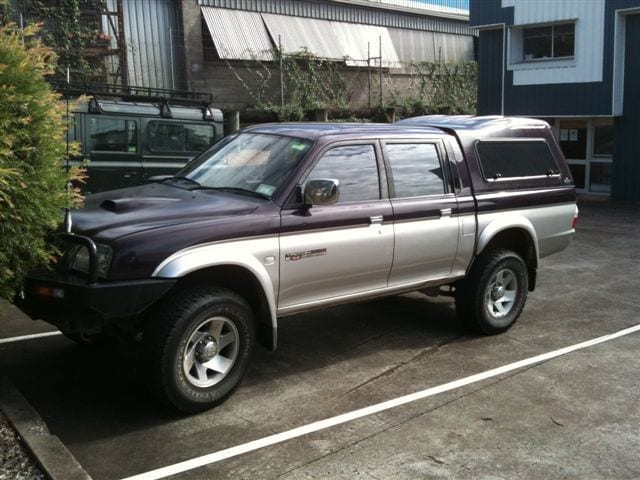
Owner, John Orth (Ormeau, QLD) advises us the Triton is a daily driver, as well as for towing his caravan. After using the FTC Decarbonizer, John says, “The power improvement is unbelievable! Turbo lag has now disappeared. There is less smoke, and it’s idling much smoother!” At this stage John has used only 1/3 litre of FTC. The engine has now been flushed with Flushing Oil Concentrate twice, and John reports, “It’s really removed a lot of sludge. The valve gear, as viewed from the oil filler point, is now clean!”
FTC Decarbonizer, the massive amounts of blue smoke had disappeared! The engine idles much better with noticeably more power. They’d gained 200 RPM at full throttle. An investment of only $238 for a saving of $40,000…without even touching a spanner!
Rigid Tip Truck with 6V92 Detroit Diesel
(K. Wright NSW). The truck does all on site work, and had coked up badly from it. As a result, fuel consumption was down to 1.69km/L. Power and economy were restored over the next 3 tanks of treated fuel…1.96km/L, then 2.12km/L and then 2.45km/L. Other trucks on site used to pass me, but now I leave them for dead!
Bertram 28ft Sportsfisher with twin BMW turbo diesels
“Each time I started the engines, the marina would be absolutely engulfed by smoke for 5-10 minutes, before it would settle down. The port engine was always difficult to start. On the purchase survey, I was advised that it might need a rebuild…at only 1500hrs!”
“After one day on FTC Decarbonizer, the engines started straight away with hardly any smoke at all. I couldn’t believe the improvement. I must admit, I was sceptical at first, but now I’ll be recommending it to everybody.”
Caterpillar D10 dozer
was left idling for 3 days, at PNG’s Ok Tedi Copper & Gold mine, after the operator became sick. This would be almost guaranteed to glaze up any engine, however this mining fleet was using the FTC Decarbonizer, and there were no adverse effects at all!
Rio Tinto Tarong Coal mine
Twelve months data using FTC Decarbonizer confirmed a fuel saving of about 9%! The power and performance of the truck and loading fleet increased, and this resulted in increased mine production. For a mine owner operator, more coal in the stockpile, is more dollars in the bank…That makes the large diesel cost reduction look like chicken feed. Rio sold Tarong Coal recently, and FTC was discontinued, as the new operator has a “zero additives policy”. Costly mistake fellas!
International Truck, 6.354 Perkins
A concrete pumping truck, it worked short runs only. It was hard to start, and suffered white smoke cold & power loss. After 1 day on FTC, it starts well and cleanly with much better power.
Dronin diesel (boat)
An old engine. The injectors were removed, tested OK, but had massive carbon deposits. FTC was used, and the injectors removed after 20hrs on FTC. They were totally carbon free.
Caterpillar Main Engines (cargo ship)
At 19,000 hrs, the owners of this New Caledonian ship wished to postpone rebuilding the engines by 3 months. FTC Decarbonizer was supplied (along with our Flushing Oil Concentrate and AW10 Antiwear) to decarbonize and destress the engines. From that point until a total of 25,000 hrs, the engines performed much better, with less oil consumption, less smoke and smoother running. They were only then changed out at the insurer’s request.
Detroit 8V71
Site tipper work. Excessive idling and cool operating temperature caused power loss and blowby. FTC Decarbonizer made a marked difference to increase power and fuel economy. It also stopped the blowby. (George, Bay City Earthworks)
Mitsubishi FP418 Removal Truck
(AAA Interstate Removals). We first purchased FTC Decarbonizer after suffering suspected glazing, due to light freight and southern artic conditions. The engine had been fully rebuilt, but was down on power and billowed white smoke. Within six hours of using FTC, there was no white smoke and power improved . On top of that, we are saving $1000 on diesel per 5L of FTC Decarbonizer.
Truck with 8V71 Detroit 2 stroke diesel
(D. Riseley VIC). The engine was so carboned up, that I could see sparks being thrown out of the exhaust at night. It couldn’t pull full revs. After a few tanks with FTC Decarbonizer, it really cleaned up, the sparks stopped and I had full rev power again.
Caterpillar D348 Powered Mining Fleet
This Rio Tinto fleet of coal haulers would drop exhaust valves at intervals of 3000-4000 hours, causing extensive damage, and considerable downtime costs. The cause was excessive carbon fouling on the valve stems and head, which caused fatigue as it rubbed in the guides, and then failure. FTC Decarbonizer was introduced to eliminate all hard carbon build up from combustion and exhaust spaces, and the problem then ceased.
Frequently Asked Questions
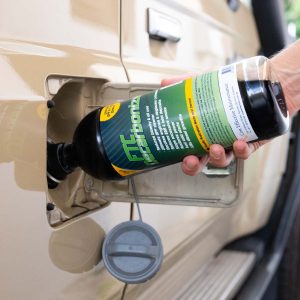
FTC Decarbonizer is added directly to the diesel or petrol tank.
FTC Decarbonizer is an advanced combustion catalyst fuel additive.
- Reduce exhaust emissions.
- Safely burn away built-up carbon deposits.
- Clean DPF Filters.
- Reduce engine blowby and oil use.
FTC Decarbonizer is a fuel additive for diesel and petrol engines.
FTC Engine Decarbonizer acts as a combustion catalyst to burn any carbon buildup from combustion and exhaust spaces, turbos, and DPF filters.
Yes, FTC Decarbonizer can be added to bulk fuel supply, or directly to the vehicle fuel tank.
FTC Decarbonizer can be used to prevent carbon-related problems that cause oil premature engine failure.
FTC Decarbonizer can also be used safely remove carbon saving thousand in repairs and maintenance:
- Maintain new vehicles by avoiding carbon buildup.
- Remove carbon buildup form badly maintained engines.
- Decoke - Desoot exhaust areas.
- Deglaze cylinders and reduce blowby.
- Stop oil.
- Clean DPF filters.
- Improve Fuel Economy.
NO. FTC Decarbonizer is safe to run through all diesel engines and will not void a new car warranty.
FTC Decarbonizer abides by all Australian fuel standards.
Yes, we regularly ship to the USA.
Or visit your local USA distributor: MAXODYNE
Yes, we ship to Canada.
Visit the local Canadian distributor ENC Additives
Summary – Independent Testing & Real-World Results
FTC Decarbonizer has been independently verified under ASTM D975, ISO 14067:2018, and related standards, confirming treated diesel meets fuel specs with excellent lubricity, low sulfur, and no contamination. Field use reports include reduced smoke, better cold starting, lower fuel consumption and extended engine life.
FTC Decarbonizer – Independently Tested & Verified Diesel Fuel Treatment
FTC Decarbonizer has been independently verified to meet and exceed international ASTM D975, CMB (AS2077 Carbon Mass Balance), and ISO 14067:2018 diesel fuel standards. This ensures cleaner combustion, reduced emissions, and verified compliance with Australian and global fuel quality and carbon footprint benchmarks.
Complete ASTM, ISO & CMB Diesel Fuel Test Results (Independent Laboratory Verification)
| ASTM / ISO / CMB Standard | Parameter | Result | Specification / Limit | Status |
|---|---|---|---|---|
| ISO 14067:2018 | Carbon Footprint of Diesel Fuel (CFP) Verification | Compliant | ISO 14067:2018 Standard | PASS |
| ASTM D975 | Diesel Fuel Specification Compliance | Meets All Requirements | Standard Diesel Fuel Specification | PASS |
| ASTM D5185 | Elemental Metals | <1 ppm | <2 ppm | PASS |
| ASTM D86 | Distillation (T10–T95) | 220–331 °C | 200–360 °C | PASS |
| ASTM D4052 | Density @15 °C | 832.4 kg/m³ | 820–860 kg/m³ | PASS |
| ASTM D93 | Flash Point | 73 °C | >61 °C | PASS |
| ASTM D445 | Kinematic Viscosity @40 °C | 2.7 cSt | 1.9–4.1 cSt | PASS |
| ASTM D5453 | Sulfur Content | 0.0006 % | <0.05 % | PASS |
| ASTM D2500 | Cloud Point | –3 °C | Within spec | PASS |
| ASTM D6079 | Lubricity (HFRR) | 0.440 mm | <0.520 mm | PASS |
| ASTM D2709 | Water & Sediment | <100 ppm | <200 ppm | PASS |
| ASTM D6469 | Microbial Contamination | <10 CFU/mL | <200 | PASS |
| ASTM D4176 | Visual Appearance | Bright & Clear | No haze / particulates | PASS |
| ASTM D1500 | Colour / Appearance | L1.5 – Light Amber | Clear to Amber | PASS |
| ASTM D613 / D287 | Cetane Index / API Gravity | 54.4 CI / 38 API | 40–55 CI / 30–45 API | PASS |
| ISO 4406 | Particulate Cleanliness Code | 18 / 16 / 13 | ≤ 20 / 18 / 15 | PASS |
| CMB (AS2077) | Carbon Mass Balance – Independent Laboratory Verification | Fully Compliant | Australian Diesel Standard | PASS |
| DT80 Performance Validation Test | Independent Performance Verification | Positive | Meets Validation Criteria | PASS |
Summary of Findings
- No contamination or microbial activity detected.
- Excellent lubricity (HFRR 0.440 mm).
- Meets all ASTM D975, CMB (AS2077), and ISO 14067:2018 standards.
- Verified by an independent accredited diesel laboratory.
- DT80 Performance Validation Test – Independent Performance Verification: Positive result meeting validation criteria.
Click here to view the Material Safety Data Sheet
Click here to view the FTC Product Download Sheet



Damian –
This stuff is next level. I bought it not expecting much. It really works. Hilux 2011 220000 on the clock. Not running rough but must have a fair bit of carbon buildup. Was running at about 11.2 per 100. Added before a big road trip. At the conclusion of the trip (3700 kms) finished at 8.9 per 100. Fully loaded win 30 kg awning and all camping equipment amazing stuff. Highly recommended.
Billy Forbes –
Used it once so far on my GWM Cannon only done 12,000 is but the DPF light would not go off till I used this and a manual burn off now 2 weeks no problem awesome
Paul Pearson –
Good value and quality been using it for a while
customer –
I have not had a chance to evaluate
George Demetriou –
This FTC diesel decarboniser is worth every cent I paid for it and I wish I discovered it sooner. I have a 2021 diesel Toyota Landcruiser Prado which was doing regeneration more frequently than it was meant to. The mechanic service centre charged me $280 for a diesel clean but it did nothing for the DPF and eventually my DPF blocked putting the car in limp mode and requiring the dealer to do a forced burn off. I put this FTC diesel decarboniser in my fuel tank using the recommended dose and old soot and coke has definitely been cleaned out of the DPF as it’s now regenerating at correct mileage intervals. I will definitely be using this again rather than paying for an expensive mechanic clean. Do be careful not to spill it on your car though as it does stain.
Justin Ross –
I am still hoping & believing it is doing what it has been made to do. Without taking the heads off, you cannot tell at all.
harold engemann –
A great product and it does very much what it claims it will do
NextGen Freight –
Easy to use product and have had good results so far
david evans –
FTC Decarboniser is a real surprise, after having other additives used when having my old 2007 BT50 serviced.
The truck is coming up to 300,000K am half way through the tank of fuelf (140 l tank) since adding FTC with the performance and economy seemingly improving each time I drive the truck.
Every outing is at least 70km mostly at highway speed as we live 30 odd k’s from town.
The question I am now asking myself is what will the litres per hundred be on this first tank 9usually) 10l/100 as the fuel gauge has not budged with now 400k on the clock?
FTC appears to be a real find for the future care of the truck.
David Evans
Central West NSW
Aaron Ellis –
I used FTC in my 2019 Ford Ranger & my 2013 Ford Ranger, They both have 130L fuel tanks & I put the initial strong dose in both.
After just 1 tank the 2019 Ranger with DPF is smoother on power delivery and the 2013 Ranger Pre DPF & 250,000kms has reduced exhaust smoke by a significant amount. I can barely see the smoke at night in the car behind’s headlights, when taking off from the traffic lights.
Very pleased.
Barry Crash McCaul –
Only in the first 5 fills so time will tell
peter egan –
This stuff seems to do what the label says
Paul Scholes –
Great product for keeping your engine and injectors clean.
Thien Ngo –
Very good product…..I use this only one time and have good results….Thank you very much
Joshua Montague –
Great product great people who stand behind it already showing change in my vehicle after first tank mixed with decarboniser
Trevor –
This product is awesome and used now in 3 cars and never have i had any issues
Ross –
I’ve been using the FTC Diesel Decarbonizer (1 Litre) and the difference is clear. My diesel runs smoother, starts easier, and the black smoke has almost disappeared. Fuel economy has improved slightly, but the biggest win is knowing my injectors and DPF are staying clean. It’s not the cheapest additive, but the performance and long‑term savings make it worth every cent. Highly recommend for anyone serious about keeping their engine healthy.
Paul Mann –
Wow a product that does what it says it will! Great results on my horrible pdf filter Thankyou
Mick Pappa –
Great product great customer service
Alexander Conway –
To be honest I was pretty sceptical of this product. I tried other products on my sister’s car that ended up having to get DPF replaced so in my 2012 land cruiser Prado was blowing a little bit of black smoke at full throttle and a tiny amount at half throttle I thought I’d be in for an intake clean but I decided to give this product try cause I heard good things about it I followed the instructions no more black smoke at all engines running better
Lance March –
Superb: like all their products. Does exactly what they say it is designed to do. Have been using it in my Land Cruiser since 2012, and in my Tiguan (petrol) since 2018. They both run better than new.
Michael Gill –
I have used this fluid for the first time and so far it appears to work.
Ameen Mahamooth –
Smooth idle
Less smoke from tail pipe
Power restore
Felicity Bunny –
Old motor runs so well past year since it was recommended I try this
Bec Ferg –
Love this product cost effective maintenance
Glen Ormiston –
Great product. Reduced fuel consumption of my Mercedes Vito van from 7.5-8.2 l/100kms down to 6.2-7.2 l/100kms average with the engine running smoother after running a couple tanks of fuel. I add it every time I fill up now.
David File –
I put it in my 1998 diesel landcruiser every time I started in the past it blew exhaust smoke in the first day I started up with no smoke it was amazing the old girl has 550000 km on it and it runs soo smooth I put it in my Mercedes gle350 and did not notice much difference it’s got 155000 but I will wait and see the Merc performance is unreal anything
Thank you
Craig Wilson –
Keeps my almost 20yo diesel running smoooooooth.
Libby –
Great clear helpful information package provided with the product.
Easy to use.
Worked great I have more power now, Ute was very sluggish on take off and up hills.
Dpf is doing better burns over longer periods.
Woody –
Excellent product. I have used it for years and I will for many more.
Max Ruprecht –
it doing the job,thank you.
Mad Mix –
I swear I can hear a whimper from the Dmax when I run out of FTC
Matthew Hughes –
Love this product for the Prado
Michael Szots –
Definitely works, using it in an engine with only 80k. regenerates less, engine feels more powerful.
Jason –
Vehicle already feels like it has better response and performance and Less lag.
stephen Sandford –
Definately see improvement in litres per 100km. And better response
Joseph Ahern –
After first use of FTC my fuel economy has improved by 100 km very happy. When the Mazda BT50 was new I was getting about 750 km out of a tank, my car in now 8 years old and I was only getting 690 km out of a tank, after 1 application I am up to 840 km out of a tank
Laurie –
Totally new vehicle
Garybaseball65. –
Engine runs smoother and cleaner improves performance fuel usage.
Luke Power –
My 89 Brumby was using a heap of oil, a bit low in power and ping a fair bit when pushed hard. I’ve completed the double dose for the first 2 tanks, it’s noticeably running better, more power, less pinging and not burning anywhere near the amount of oil it was! I’m gobsmacked at how well this has rejuvenated the engine!
Dale Hansen –
Does the job
Peter Davis –
It is a great product, only used 1 tank so fare & it starts easy in the morning & runs smoothly. 1996 coaster motor home.
Macario Festejo –
Bought this product to try based on positive reviews and true enough, it works! I followed the instructions, drove to Melbourne and back and fuel economy improved a lot after only 2 tank full. You can feel the improved response from the turbo and smoother running of the engine. Car is Pajero Sport 2022 fitted with AT tyres. I also use their other product CRD Fuel Enhancer
A & S Davis –
I have been using FTC Decarbonizer in my 2012 D-Max for a few years now. Have also given trial samples to several friends and relatives who I believe have since become Cost Effective customers.
One in particular is a Nephew who has a four stroke mower that had lost compression, was burning oil and was difficult to start …… One dose of FTC and problem eased dramatically …… on-going use problem solved.
Need I say any more than it’s a great product.
Sean Murphy –
I use FTC Decarboniser as a maintenance dose in my 2015 NX Pajero. My daughters 2011 Mondeo developed a DPF blockage and would not perform a DPF regeneration on it’s own. Even with several forced regenerations, it continued to go into limp mode. After just 3 double doses of FTC, the car is running perfectly with no CEL or codes and is performing DPF regenerations on its own. Brilliant stuff.
Denis –
I ordered this product because of a lot of diesel smoke on start up 3000 k later no smoke 🥰🥰
Robert Evans –
I haven’t noticed anything…BUT that’s sort of the point of using the DPF decarboniser in the first place!
keith brimson –
My cruiser is starting a lot better on cold mornings .
John –
Great product 👌
Dirk Kotze –
Done a lap of Australia 22000 km with my VW Touareg, average fuel consumption 15.5 km/l with a 24” caravan this stuff is very good,could see my consumption going up when I ran out 5000 km from home.
Steve –
It’s hard to know for sure but I believe it’s a great product doing a great job.
Robert WADE –
Yesterday was the first time I used this product so unable to provide any comment at this stage, maybe in a month I will.
Robert Wade
VW Touareg Diesel 2016
Brett sayer –
Still undecided if if works or not will know after a couple of full tanks.
Adam Winkler –
.
Robert Upthegrove –
The best product on the market I will definitely be buying more it was a pleasure doing business with your company.
Thank you,
Robert Upthegrove
Ben Murfitt –
Great product, I’m using it on 2011 ford territory diesel with 400000km on it with everything original, so I thought I would give this stuff a go to clean out the soot and after one tank full with a double dose , I’ve noticed a difference 👍🏻
Brad Faithfull –
Works well
Tim Chappell –
Early indications seem positive. Less need for gear changes driving around hilly suburbs with a trailer.
I can’t really tell if there’s a difference in milage yet, as my usage is varied. I’ll have more of a clue after next weekend’s round trip to Hervey Bay.
Kim –
Excellent product and service
Murray Tennet –
FTC decarboniser
2015 Flhxse 124ci Harley
I noticed a difference straight away with running FTC bike ran well. I just finished first tank and pulled air cleaner off to clean and inspect intake the intake usually has a black grime coating intake Wow the intake is like brand new that is a testament this product works.This product is nothing short of outstanding.
mark bray –
Definitely works and I’ll continue to use it. As the saying goes, LESS SOOT MORE M—-🤣
Guest Guest –
Have used be for has been and still is a great product
Dominic Pepe –
Using this product for over 15 years and my engines are still running a peak performance .
Karen Cole –
1244567890
Patrick Clewley –
It works extremely well in BMW x5 e70 M57 diesel clears any smoke problems quickly improves boost.
Bradley Mitchell –
The product is Good
Gregory Drew –
Been using for many years. Good insurance
Eric Rose –
Awesome product, does what they say it will do, keeps my dpf flowing free and easy in my 200 series and have never had an issue with fuel bug or dirt fuel
John Hardt –
Very happy with the product.
Just purchased the 2nd Bottle.
Steph Zimmermann –
Great product for diesel vehicles!
Norma Henderson –
this product came highly recommended. am on my second bottle.
Aussie –
Been using there products for years now always great service and car runs like a dream ,highly recommend these products
Lorrie Burnett –
Always easy to deal with, super quick deliver to others idea of the country WA. thanks CEM
HARRY SINGHRAI –
worked as it says within first 100 kms noticed smooth engine operation no noises & next to nothing smoke
Grant Fuller –
May be too early to rate yet having only just purchased
SCOTT S –
I’m so far pretty impressed, this decarb stuff was recommended to me by a diesel fitter friend and I was pretty sceptical. My old 1hz has unknown ks plenty of blowby and burns a little oil.
So far I have done 500ks with a 2L dose in the tank and most notably is a pretty good reduction in oil usage and a little less blowby. I also now have a little more valve train noise ( telling me that the carbon around the valve seat and stem has been cleared and now showing I’m due for shims)
Overall pretty impressed 👍
Garry Vapp –
Egr clean up
Steve Cork –
Fu—cking awesome shit is all I need to say
recently purchased a 2015 Audi Q7 V8 4.2 TDI cheap, it was smoking quite a lot ….. not anymore thanks to FTC, double dosed it three times now, next time will be the normal dose, have also done an engine flush and the oil is still clean, top notch stuff ….
thank you
Steve
Brian Wishart –
I’ve used this stuff fir years with many different vehicles, works well.
Nathan Bennedick –
Cleaning out captiva with dpf issues. 1st tank lots of smoke. 2nd tank engine light came on. Drove hard up to 3000rpm for 2 hours light has gone out. Lots of grey smoke. Interestingly checked the oil level and it has increased a fair bit and really black thick consistency. Considering changing oil after 4 double dose treatments. The product works. Couldn’t be happier. No more dpf lights or engine warning lights. The power increase has been noticeable hopefully the fuel economy will come down. To keep your diesels running as they should please use this product as directed. It works.
Barry Goff –
So far so good, no significant issues or changes, so all must be good.
Allan Goldby –
So far so good. I think I have a bad carbonization issue that seems to be becoming better. I’ve only pushed through one full tank initially, and it has already made a considerable difference.
Hopefully that continues.
Matt Graves –
Amazing fuel consumption down 1 ltr per 100 km than normal
Competitive concrete –
Great product would highly recommend this to anyone who is interested in looking after their diesel engine
Kevin Connolly –
Great stuff, no DPF problems after using this, highly recommend.
Jodie Scotney –
Like any product you’re a bit skeptical and using something new but this product is awesome worked so much better than expected.
Bill, Wodonga Victoria. –
I have a 1997 2.8L turbo Rodeo with 270,000k on it and was blowing a lot of white smoke on cold starts and wouldn’t pull well at all in the hills here in NE Vic. I had been using a semi – syn 15w-50 diesel specific oil in it and found it was too good for my “tractor” engine. From my knowledge as a motor mechanic and the symptoms produced, I believed my engine had severely glazed cylinders. I changed to a 20w-50 premium mineral oil but after 3 oil changes, still had the same issues. I looked around for a solution and found FTC Decarbonizer. From the reviews I read and after speaking with the tech staff at CEM, it appeared to be the answer to my problems. After running about 600ml though it over about 5000k, and making it work through the hills, problem fixed!! (I did finish using the remainder of the FTC Decarb.) The old 4B had more power in the hills than ever before, no white smoke on start-up and approximately 1.5L/100k improved fuel economy (depending on driving conditions). So to say I am totally stoked with these results would be an understatement. Thanks CEM!! (Apologies for the long winded story).
Troy –
It’s made my 3.2L ml triton run smoothly and going through way less fuel also improved my torque and power. I did a double dose and I’m still on the 1st tank I’m down to half a tank. Where normally at half a tank I would be at around 200kms now I’m at 290kms so that’s a huge improvement. It worked way quicker than I expected.
Ross Dyson-Smith –
It works. Worth every penny
Damien Ghiraldelli –
So far so good . 1st tank treatment . Will monitor.
Kym C –
Great product that keeps my vehicle running great.
Richard C –
Used in 1KD Prado with DPF issues. Improved fuel economy and regeneration burns.
Also used in 3.2 Ranger with high km. Reduced black smoke and improved cold starting.
I would recommend this product.
Ezy –
Not long enough yet, but first tank(70lts at double dose) appears to have reduced consumption about 5%.
Peter –
It’s too early to tell only used one dose the doser works well
Steven Atkinson –
This product seriously works. I have a Triton MQ 2017 dual cab 2.4 diesel turbo with just under 60,000 km. The DPF light appeared so i researched for a product to help. This product has cleaned the DPF. I can notice the improved performance. The minimal amount required is astonishing value for money. Highly recommend 👌 👍
Michael Bryen –
Good product have used several times before,good customer service order one day and receive the next can’t complain about that for service.
Frank Lawrence –
Fast and efficient customer service. Only used the initial first dose with my vehicle, and satisfied with the results at this stage.
Leigh Twigg –
Perfect, keeps the 79 series running smoothly and the two stroke motors are easier to start with a cleaner exhaust and no smoke.
Luke –
Finally a product that lives up to what it guarantees.
Excellent service and Excellent product…
Bruce Hay –
2nd time buying this, so I guess it works as they say it does. I don’t seem to get the DPF light on as much. Happy to keep buying it when needed but gee it is a few $$$$.
Fully understand the development that was done.
I also buy 3 other products from this company and all seem to work fine.
Ian McGivern –
I’ve been using FTC since 2017 when I bought my new 76 Landcruiser. It’s running a high power unichip map and a catchcan with a Manta DPF back 3” straight through exhaust. It’s just done 210,000km and is still running absolutely clean. It gets FTC at every fillup in the 180lt longranger tank.
The car works pretty hard and is used in some fairly harsh conditions and the oil is always clear when changed.
This stuff really works!
Peter Zell –
Just used it on our 220hp case tractor that had oily exhaust,now dry better start and fuel economy verification
David Edwards –
Prado 120 going strong
Kevin Pirani –
I have worked in the Auto industry for over 40yrs, I’ve seen plenty of SNAKE OIL in that time but i do believe this product works.
Donald McILvena –
has improved the fuel used by 1 lt a 100km in the first 500 kms
Barry Siebenhausen –
Increased km per tank by 50 plus . Stopped smoking on start up . Runs better.
Adrian –
FTC Decarbonizer has made my td42t very smooth to drive and a slight engine jerking response at low rpm has now gone away. The vehicle is exceptional smooth and efficient to drive now. I will continue to use FTC Decarbanizer when needed.
Darryl Porteous –
I do admit my vehicle has only 40K on it and was hoping it would decrease the frequency of dpf operations, however I have not noticed a difference.
Ugo T Tezzele –
Very good 👍
Barrie Moyle –
With my Subaru outback Diesel I was having trouble with the emission control (DPF) and had to attend the dealer to clear it with a forced regeneration at a round figure cost of $5-600 included the necessary oil change following the regeneration. Since using the FTC decarboniser at recommended rates now for over 12 months has not needed another regeneration. Unfortunately with my wife and I over 83 our main us is local type use (short running)
Paul Pearson –
Fixed my blow by
Ian Vanderland –
Great customer service
Paul –
The improvement in performance is noticeable when towing and my catchcan now has only about 50ml every 10,000km!
Nick Brockbank –
Seems good, but too early to fully tell. My friend is very happy with it.
Daniel Cochrane –
Excellent product
Stan –
Has helped with quieter running and better fuel economy. No smoke.
Andy Nicholls –
The Chrysler 300c diesel is in love with your product(s).
She now purring and wants to fly.
Neil Bell –
Great product works well
Ian Pink –
I have used both these products in 3 tanks of fuel I’m now using 3 litres per hundred kilometres less than before and the motor is so much quieter especially on start up great product that actually works
Bill Richardson –
Used for a decade or more, nothing compares
John Hardt –
Great product.
All DPF problems magically disappeared.
Gary Phillips –
Ghdtjh jcdtuj
Garry Bourke –
Been using this product for about two years now and do recommend it as it has solved my dpf issues
Mr peter west –
Seams to help our suv heaps will keep using the product
Steve –
Early days yet for a product review but the people and company are good to deal with. The product comes highly recommended.
customer –
This is an amazing product! My Triton MR series developed serious injector clatter and was ” hunting” at any constant throttle position after a trip from Brisbane to Perth through the Nullarbor. I was told to replace the injectors, but a friend suggested that I tried Cost Effective Maintenance’s CRD Fuel Enhancer and FTC Diesel Decarbonizer. After four tanks of treated diesel, my Triton sounded and ran like new. I now treat every tank of diesel with the maintenance dosage of both the CRD Fuel Enhancer and FTC Diesel Decarbonizer. It is worthwhile noting that it works out substantially cheaper to buy both the CRD and FTC additives in larger volume packaging. I buy the FTC Decarbonizer in 5 litre size and the CRD Fuel enhancer in 1 litre size.
Dean Allan Jendrzejak –
Have been using this product now for a number of years now on 3 vehicles and am pleased with the results. Smoother running, better fuel economy, more power and quieter engine. Highly recommend.
Deano –
Great product, I have been using it for 20000 klms in my LDV T60.
Most diesel’s have a black carbon residue on the exhaust, mine has next to no carbon deposit and never any visible smoke.
One word of caution, be careful when pouring as it does stain well.
I think this product does what it claims to do and I will continue its use and recommend it.
Anonymous –
Actually works. My V6 TD engine started misfiring on cold starts, 210km on the clock. Mechanic diagnosed old fuel injectors (which I agree with). After running 3 tanks through with this the car no longer misfires at all, running a lot sweeter and fuel economy has improved.
Roger Oddie –
Product is fantastic.
Service is fantastic.
Peter Ferguson –
Highly recommend
Patrick Nolan –
It just simply works
Mike Rose –
I bought a catamaran that has 2 4JH5E motors. For some unknown reason, the previous owner was running them without thermostats. I bought the boat knowing the engines were totally glazed and blowing an incredible amount of smoke.
A mechanic recommended I give FTC a try. I was extremely reluctant as I was already looking at a huge bill to overhaul 2 motors and I have always been extremely sceptical when it comes to fuel additives. I gave it a go. Little by little the motors improved. I am totally shocked. They are both running really well and are smoke free.
FTC has literally saved me thousands.
I highly recommend this product.
Cheers
Mike Rose
Nigel Burgess –
Has changed the performance of my 1m km 80 series Land Cruiser.
ALAN BARBER –
This is my first purchase of this product, so have yet to use it in my 2.7 TDV6 Land Rover, but given other reviews, I look forward to excellent results.
Adrian Grossman –
After running the FTC decarboniser for a full tank, I have noticed a small increase in engine response and fuel economy.
Lisa –
This product was recommended by the seller of the vehicle my son purchased, and he has used it ever since -(4 years now). The car is an older 4×4 and my son believes that this product has played a big part in the performance of the vehicle.
Michael Jorgensen –
Perfect for DPF vehicles
Rik Vrenegoor –
Cars run a lot smoother
Grant Smith –
Keeps my engine in good working order
Anthony –
Excellent product
Darren Buchanan –
still in the progress of using the product.
Alan –
A great product
Mick Hawdon –
Have only just started using it first tank of fuel will be interesting to see how it performs in my 2014 Cruiser 79 series crew cab have only done 115,00klm but have noticed sooty exhaust when taking off early in the day.
Mikel Macdonald –
Excellent product
Gerry Kouloubaritsis –
Great service
Great product
A++++++++
Peter Gunsberger –
It has improved the performance of the vehicle considerably.
Mark –
Ha e just put it in my tank will see how it goes
Perry –
Used in vw tiguan 220000ks & now not smoking
Brett Parks –
Two tanks using FTC Engine Decarbonizer and I’ve seen a major improvement in the power I’m getting from my ute. Heavily carbon buildup due previous owner only doing short city runs. Now 1500km latter throttle response is crisp. Starts easily and mayor reduction in exhaust smoke. Getting extra 150km per tank.
Win all round.
Rex Talbot –
Really like this product. Seems to work well, just wished it was a little cheaper 😜
Simon Barclay –
I have added this to my three diesel vehicles and the improvement was instantly noticeable. Two are on their second tank full and one on its first, so double dose still. The engines run smoother you can feel the old power being restored as they seem to be running more freely and smoke has almost completely disappeared.
Ian McKay –
Always great product and brilliant service. Highly recommended
Craig –
Excellent product that works
customer –
Well worth the cost of this. EGR value, in the end had to be replaced, however I could see the effectiveness on the old EGR value. Thank you.
John –
I have not had the products long enough to determine the effectiveness
CEM are a good company to deal with offering excellent service.
azane –
Dynamite for your motor. 2011 IMAX running smoother with better efficiency and power on FTC decarb
Mad Mix –
Have been using this product for yeard
John Wilkins –
This product has reduced the blow by in my Patrol significantly and now the catch can barely needs touching between oil changes.
Eoin –
I’ve put a double dose and can see a bit of difference within two days. I’ll check again in my next diesel fill-up. So far so good. Definitely will buy again.
John The Garage MARTIN –
Have been using this product for 15 years in my 2009 MN Diesel Triton.
Am still running with original injectors.
Also using your CRD Fuel Enhancer.
What more can I say !
Great products, fair pricing, terrific service.
Phil –
Ftc decarbonizer has given my tired old diesel a new lease of life, there has been a noticeable improvement in fuel economy and power, it is starting more easily and blows less black smoke on startup and along the highway,I would have no problem recommending ftc decarbonizer to others, very happy with the product
Garry Bourke –
Been using your products now for about a year and I truly believe that the product is one of the best. My dpf problems that I was experiencing have ceased and my confidence in your products increases more each day
Brad FRIZELL –
Works great
Phil Hart –
Great product. Does what it says it does.
Mark Wehse –
Just seems to work, increased milage not cheap but you get what you pay for.
Colin –
My “go to ” for over 30 years now
customer. David Daly –
Need to run a few tanks through the cars, but so far so good
Alan –
So far so good been using it for a couple of weeks now in the mux a give it a few months and should see more results thanks Alan
customer –
The Px2 Ranger feels fresher and more spritely after a dose of Decarboniser.
Lee Hancock –
Never received my order
Dave Dolan –
👍 👍👍👍🤙
BR –
Excellent product. DPF burns don’t take as long and keeps the 2019V6 Amarok running smoothly with plenty power available.
stephen Sandford –
Well hopefully it clears my DPF and internals. Prevention better than cure
Anthony –
Outstanding product
Kevin Connolly –
Really great stuff, BT50 runs cleaner and smmoother! Does what it says!
Paul –
Absolutely amazing stuff! Onto my 2nd bottle, my diesel 4wd runs, drives, idles, reacts so much better since using this, having a dpf has caused past issues and often regens but not anymore, been a great benefit
sharon britt –
Great product and service
Edward Buckley –
Seems to do the job fairly well
Adrian Patterson –
Improved performance. I ran out whilst travelling and noticed the difference without it. Now carry an extra spare litre with me.
Vic Bulman –
Just added FTC Decarboniser DPF cleaner to 2 vehicles . Double dose . BMW X5 and Ford Ranger 2010 .. This product appears to act as a fuel booster . Both vehicles running and starting better . Very noticeable surprisingly. Will do another review after 2 Tanks used to see if it helps my BMW DPF issues .. And see if fuel economy improves . Hoping it does both . So far I’m impressed . No other product has noticeably worked for me .
Danut Stoian –
It is an excellent product, i highly recommend it
michael yaxley –
Awesome product it’s bought my 200 series landcruiser back to life.
Paul Hansen –
It is difficult to review a product after three tanks without there being a huge improvement which I have not seen.
As for long term use with the cost of living where it is I would be hesitant to buy it ongoing.
Time will tell and maybe this review is premature.
Mark Smithers –
I think I’m happy with the product, haven’t had any DPF issues since using it as per the requirements. There’s been a noticeable improvement in fuel economy down to 6.6 l/100km on a 1000+ km trip
Peter Zell –
Cleans the combustion process up very well..had deutz diesel generator spotting oil out exhaust, cleaned it up and started better
Mark –
I have put one tank full in. My Ranger is pulling up the hills much better.
Too soon to know any more.
Terrific service, prompt delivery.
No complaints here.
I did purchase this product for preventative purposes.
RAY OSBORNE –
less black smoke clean turbo smoother running
Owen –
Super stoked with the FTC Decarbonizer and CRD additive on my re-tuned 2011 GU Patrol that has now done 200,000kms. Certainly experienced the smoother, quieter running and elimination of the black smoke that I did experience in certain scenarios. I feel the black smoke was largely attributed to the carbon buildup from shorter runs I have done over recent months. With the engine efficiency up, I have also noticed the EGTs are slightly lower when towing the camper on long hills etc.
At time of writing the review I’m only on the second tank fill of the double dose of FTC and CRD, very pleased.
Well done Team CEM!
Bruce Cartwright –
An excellent product I had used earlier in my DI Patrol, oil seemed to stay a bit cleaner and the performance was still pretty good.
Rob Williams –
Hi , I have a fully reconditioned L/C engine HDJ-FTE, that has a blow by issue from rebuilding,
I started using FTC Diesel Decarbonizer , in the vehicle for the last 8000 KM and the blow by has reduced dramatically, very impressed
Tony –
product seems to have improved the cold start up and has improved the response on the engine would be well worth trying this product
performs as advertised
Geoff J Dillon –
First thing I will say is despatch and delivery was same day and next respectively. Awesome. Great service right there. The product will take a bit of time to evaluate as I only just purchased my car and am only on the second tank. Car only has 680000k on it so wasn’t so bad to start with. More of a preventive buy. Happy so far. Best delivery service I have ever seen.
rob little –
this is the second 5ltr container we have bought for our workshop and we have had some really good results !! All five of us use it in our personal trucks and vehicles and to date have had no carboning up of egr valves or dpf units.also have used it on customers vehiles with codes for egr valves and treated the fuel with this product and we have had customers return after one or two tanks used with no return of engine light or codes.
so in our opinion it appears to work !!!!
Barrie Moyle –
Thank you for the opportunity to comment. The service and dispatch was absolutely first rate however at this stage I am unable to comment on effectiveness as although I have put into two vehicles a Subaru Outback Diesel and Mitsubishi Pajero also Diesel only the Pajero has had any use and then only 40 odd Km. Clearly not enough travel to properly see any results.
However I am confident that if the advice and dispatch is indication of effectiveness it will be fine.
Michael Shugg –
Great Australian product it did what it promised
Peter C –
Highly effective in keeping my diesel truck engine clean. Highly recommended for all diesel engines.
Stephen Henning –
Absolutely finominal
David Potts –
Great product. I use it in all my trucks and machines.
Steve Cork –
i hear so many reports of dpf failure on VW amaroks, have been using this since i got mine last year and have never had a problem
Troy Duke –
It’s a quality product that I have used for years
PHILLIP LANE –
Excellent service Excellent quality
Paul Scholes –
Fantastic product cost effective maintenance.
Scott Johnson –
Hurd good story’s about product package arrived today will be interesting to put to the test.
Thanks heaps.
Sebastian –
Great product, if you love your car treat it with this as well as the crd injector cleaner
Jeffrey Melton –
I can’t comment on this item yet as this is the first tank we have put the additive into.
PETER BARTON –
It’s does what it said it will do great product
David Graham –
Hasn’t improved regeneration time between burns
Bruce Hay –
This is the 4th product I am using with this company. First bottle of this so a little early to tell how good it will be but I assume like the 3 others I use it will work just fine.
customer –
Hi just new to this product, and only on the first dose but I feel my car is responding well to this product. The main reason I am using this product is as preventive measure to DPF blockage. Having experience this issues, hopefully for the first and last time.
scott harper –
Excellent product, I use it throughout the range of diesel engines in my fleet.
Dean –
I’ve tried a number of different fuel additives but nothing is as effective as FTC Decarbonizer. One of my TD42s was blowing a bucket load of smoke and carbon particles, after a couple treatments with the FTC, it’s stopped and now hums along nicely. I’ll definitely be adding it every time I fill up.
Sem Lim –
Very good reduce my car smoke give more smooth run on my 80 series 👌
Josh Daymab –
Noticeable difference in 2010 LC200 270000km after running FTC for a while it feels more energetic and oil visually seem cleaner between services. Recommend as either maintenance on new vehicle or helping an old engine clean up
Fatima –
I had the Filter light on for 3 weeks now, with loss of power on my BMW x6 2009. No amount of long distance driving was fixing the problem. Did a double dose and with less than half a tank of petrol. The light stopped coming on and drives so much better. If I didn’t use this, my next step would have been to get the filter removed and cleaned. the reviews helped me make a decision to try this, I am writing this review hoping I have help someone else.
Isabel McDermott –
Great doe Amarok especially whilst towing 23 ft caravan thanks
Matt Smith –
Works straight away, engine feels more free and more responsive.
Kevin Connolly –
Great stuff, you get what you pay for and this is worth the little bit extra!
Graham –
Been using this for years and my mechanic says my engine, dpf, and egr are very clean.
David Meakin-Jones –
Worked on my Fishing Vessel with a 30 year old Mercedes OM346. So put it in my 2007 BT 50 much better pick up and fuel economy has improved noticeable
Deano –
My ordered product arrived quickly and I’m now on my second tank of diesel, so it’s only early in my use of FTC decarboniser.
I look forward to decreased maintainance costs going forward.
Danut Stoian –
I’m not driving my Aud a6 I’m flying it and got cot speeding ,I told them it’s your product
not me and they should try it. 10 out of 10 for me.
David Paice –
My BT 50 3.2lt is running like new after adding a double dose to my fuel tank and travelling 200km on Hwy it has done 150,000 km very pleased with the results.
Barry Lyon –
Exceptional product, virtually eliminated blobby and smoke on an Isuzu 4bdi engine in a Land Rover that has done 700,000 kilometres
Ashley Mahoney –
Awesome product
Frank Latty –
Still too early to tell how good it works as I have only traveled 400kms since adding to the fuel. Have not seen any significant fuel mileage improvements yet, however I think the engine does sound quieter. Early days
Dale –
Awesome product
Neville Walker –
Only just started using this product hopefully it works like it’s supposed to & gives my vehicle better mileage & gets rid of the carbon buildup.
Matthew –
Great stuff
Use in my pajero / toyota 86 and my harley
Rodney Bates –
Seems to make engine run smoother
Wolfgang Gertis –
Very effective & great with the measuring device
Brad –
Service and knowledge of products was great
Les Benson –
After a short time of use the vehicle feels a little more responsive. It will be interesting to do a fuel consumption check down the track.
Paul –
The only additive that sticks to its word, amazing!
Patrick Clewley –
It appears to be working as car seems to be getting more responsive and economy’s coming back and smoother idle
Phil Hart –
Does everything CEM say it does. Excellent product, definitely getting more.
Paul W –
Only in the first tank. Too early to tell but I expect it to do the job as stated.
Tony Loiterton –
5 years ago our 1hz was using 1 ltr of oil every 1000 kms, the blow by was massive the oil filler cap if you didn’t hang on to it you had to go searching for it. Today this 1hz uses no oil, and the blow by WHAT BLOW BY. Would you use FTC Decarbonizer 100%. Words cannot explain how good this product is until you start using it yourself.👍
Sean –
My Ducati ST4 had the ecu fail. Dumped way to much fuel in. In order of 30% more than needed.
In process of diagnosing, still rode it a bit and it got clagged up with carbon.
Replaced ecu. Fueling back to normal.
Pre ecu fail, fuel use around 20km/litre.
Bike has 120,000km. Is maintained very well.
I have used FTC as a preventative, not as a fix in the past. This is first time i have had to put it to the test.
As apart of full service, performed a leakdown test. One cylinder, 9% loss, other 15%. This is well into rebuild territory.
The plan is too rebuild, but thought would try FTC and see if it could make a difference. Double dosed fuel with FTC, for next 2000km. Rode bike in a normal sense. No flogging, just touring.
Current result, fuel use 20km+ per litre at high way speed. But the big plus, performed another leakdown test, both cylinders sub 5% loss.
Pretty solid result. No rebuild for now.
Will continue using FTC, at normal dose ,as a preventative.
Have used CEM products for a longtime,and won’t be stopping anytime soon.
Thanks.
Douglas –
Have been using for more years than I care to remember, in my boat, Pajero Sport and soon a Sportage, the product works and works well, use with confidence!
Shaun Taylor –
It good and it works
Karl Camden-Burch –
I have a Hino bus RB145 Motorhome and since I started using the FTC last year the Bus runs smoother with less black smoke. Before using FTC I had tried other products without any success.
Neil Cant –
After a trip to and from Sydney to Canberra the check engine light on my 2011 Mercedes C200 CDI has gone out and the car is running more smoothly. To Canberra it averaged 5,4 l/100km and on the way back it averaged 4.8 l/100km. The engine when overtaking at 100kmh is much smoother and more powerful. So far i am stoked!!!!!!!!
Graeme Marshall –
Just on first tank of fuel after receiving the order, vehicle seems to start and run cleaner, looking forward to the long term benefits
Geejay Ess (Geejayess) –
I have been using this product for.years, absolutely brilliant
Jeffery Livingston –
Engine running more smoothly and quietly to be 29 years old.
mark bray –
Product, service and delivery was all good at this time I’m still reviewing performance.
So far I’m still happy and convinced it’s all good. I’ll get back to you once I’ve clocked up some more k’s.
customer –
Bought a high mileage 200 series landcruiser that was using oil between services. This stopped the oil usage and improved the fuel economy. Great product.
Paul Hooker –
So far all good, engine seems to be running better 2015 Amarok 2l
Roly Gill –
Noticeable reduction in blowby smoke after about 300kms hopefully as I keep using it it will quiet the cold start diesel knock. I’m using it on a Nissan Navara V6 with 208000 kms.
Ray M –
I have used this product since my 2008 Prado was new and have never had any problems!
Rod Van Leeuwen –
Going on a long run see how it goes, starts better won’t know till it has a good run
Karen Cole –
Quick delivery
Chris Parko –
Good quality and great service
Dane Johnston –
Incredible product thank you
Scott Hunziker –
Great product and fast shipping!
Mad Mix –
Have used this product for the last ten years, wouldn’t do without it…
Rod Boothman –
Great product, noticeable engine responsiveness within a few days.
Ian –
I have 2 BMW X5 3.0sd vehicles both over 170k. I regularly change the engine oil but they still carbon up internally causing the DPF to require manual regeneration via a scan tool. After using FTC double dosed first application and then second dose normal the two are now not blowing black smoke on acceleration and feel like they have more power. Since using I no longer have any DPF issues.
Great stuff highly recommend. Cost comparable with other products available at Supercheap etc
Very impressed
Jonathan Rowbury –
Does what it says it doed
Shane Mackiewicz –
Very easy to use and I hope it dose everything it’s ment to
Glenn Agnew –
These products are really amazing. The difference in power delivery and quietness in my D4D Hilux is truely noticeable.
Sean Smith –
It works great so far, it eliminated the rough idle and reduced the blow by.
Matt McEniry –
I Put CRD Enhancer and fuel Decarboniser in two Diesels, over ten years old, and 170k kms, they both started running less noisily and smoother, and continuing to improve. Am I going to put it in the next tank? Of course! It gives me confidence that I can continue to keep the car for a while yet! First two tanks were double doses, now just using normal doses, had no problems.
Bruce Hansford –
Great Product
Jason –
Slows down oil consumption.
Kal Bruyn –
Been using it for years in my Detroit truck now using it in my vehicles with high km on them had no mechanical issues since
David –
Have started using this product and have run 200 ltrs though a a difference already, diesel smoke is less so will continue using
Damian –
Good product using in two of my cars definitely making a difference
Lawrie Howard Q –
I have used FTC off and on for over 5years on petrol and diesel Jeep Grand Cherokees. Works so well and the benifits last even when you skip using for a while. It’s a bit pricey up front but lasts as you spread out treatments. Good stuff!
Philip –
Double dosed first tank as per instructions. within a half tank of usage, rough idle cleared up on my 3.2 Pajero Diesel and getting better by the day. Would have liked to take it for a country run of 600kms but time does not permit. Just city running and have noticed a marked improvement
Craig Reed –
Great product
Anthony –
I’ve noticed since using it, my litres per 100 klm has gone from 5.6 litres down to 5.2, my engine is more responsive and runs smooth.
YogiShan Hung –
Have only done 2 tanks so far but im sure I can hear and feel a difference already. Maybe positive thinking but either way it’s working
Barry Eglinas –
Great product,had injectors values down at Toyota 10 months previously, and again having used over that period cleared up 3 injectors on vdj- landcruiser
Peter Porthouse –
I bought a ranger 3 years ago and I’ve been adding decarbonizer to the fuel since it was new and it hasn’t had to regenerate the dpf yet.ive heard the rangers can have problems with blocked dpfs. I think this product is awesome.
Brid Walker –
Hi Paul, you won’t find another product that has been tested and proven to reduce emissions. Feel free to give us a call if you need to.
Paul cooper –
Would not buy at this price can get same thing different product 35 dollars per litre
William MacDonald –
I have found the responsiveness and assistance from this organisation excellent. Looking forward to the outcomes of their FTC additive in due course
Craig Wilson –
Awesome product, I use it in my older diesel 4wd especially on long trips where it gets a decent 2hr plus run.
Brett –
Once I added FTC within the first couple of hours I noticed a difference , the truck was running ok but not working the way it should but after adding FTC I noticed how it was performing much better in the hills .
Glen –
Pajero Gen4 Deisel, 500,000km
Runs like new on FTC Decarbonizer (Started at 200,000km)
FTC added ever tank.
Clean burning, Sweet smelling, No smoke and clean oil.
Highly recommended!
Highly Recommended!
Simon Mann –
Excellent product and keeps the combustion process and engine cylinders clean and helps maintain good fuel economy.
Paul Kelly –
Received my second bottle , and I’m very happy with the product performance
Shane G –
Only used 1 double dose so far, but seems to be doing a great job cleaning the system.
Rodney Sombria –
so happy to find this product. save my engine.
Phil Rigger –
It seems to work well. The price was a bit expensive, but I’m happy to have the product
Anthony Snow –
Have had heaps of trouble with DPR valves but since using this product cross fingers we have had nothing.
Tommy Gibson –
I have only just started to use this product and I have not had time to evaluate it.
Clint caputolan –
good product
KRIS JACOBSON –
Only just started using so I’ll be interested to see what happens if anything, really cannot give a rap either way yet but this survey is rather insistent
Mal F –
Awesome product made in Aus.
I first tried it when my 2004 400k Toyota Prado Diesel became sluggish and smokey.. When warm already and accelerating from 60klph to 80 kph it would smoke and struggle until 80kph.
After a few doses, it now has a single small puff and acceleration is enjoyably resposonsive for a small old diesel.. I shared with a friend who had a machine that was hard to start and smoked like a steam train. It now starts easy, has more power and way less smoke.. So many real life experience reviews- The Products results does it’s own Marketing.
Well done to the C.E.M team!
David Boyle –
Perfect solution for the carbon build up in my 2009 Hyundai imax diesel. It’s already running smoother. Am yet to internally inspect but I’m certain it’s doing it’s job.
customer –
A synthetic oil had been inadvertently used as a running in oil in a rebuilt Chev 383 engine which had moly rings. The engine developed enough blow past to surge the oil pressure and blow the dipstick out. The wrong oil was dumped and the engine refilled with running in oil and FTC Decarbonizer in an attempt to deglaze the bores. Improvement was noticed fairly quickly and a complete fix over 20 hours use. I now use this product regularly.
Michael jorgensen –
I have been using these products in my vehicles, Bikes and outboards – basically if it has an internal combustion engine, I have added these quality products over the past decade.
David Fenech –
Real world results, from an app on my phone. Hadn’t used FTC for a while, and went back to it, previous tank was 11.47L per hundred over 574km. Next tank, same driving style and times etc,
9.44L per hundred over 560. 2011 Pajero diesel with plenty of extras, bridges at 3T with me in it. Happy to provide a screenshot showing results.
Chris Connor –
Good quick service. Plenty of advice come with product👍
Gary Reid –
Second tank of fuel, haven’t seen any improvements
steve maddox –
Excellent product followed by the same in service
Tony Alevras –
Good product
Craig –
A product that gives proven results
Ray Johnston –
Good Good Good
tony avila –
works well.
Scott Barnes –
i can recommend FTC,
Gary –
So far only on the 2nd tank of fuel but economy appears to have slightly improved.
Nathan –
Seems to help clear carbon build up from cylinder onwards. Have been using for few months notice a difference in engine running.
Gavan Black –
I’ve no idea really if this stuff works or not. I keep using it though.
Ken Hammett –
Awesome product I have a different car now, better starts more responsive it’s great stuff.
David Trevor –
Hi , I have been using FTC Decarboniser with CRD as well as the engine flush and AW10 in my 2010 MN Triton for 11 years . My Triton has just clicked over 595,000 km and does not burn a drop of oil in between its 15,000 km oil changes, it is also still on its original set of injectors ! with no loss of power and still the same fuel economy as when it was purchased new . I have introduced many friends and workmates to the range of CEM products and all agree this stuff really works! Needless to say I will continue to use FTC and the other products in all my farm machinery forever and a day . A great Aussie product.
Bevan Hayward –
Hi, I tried this product in 3 vehicles and a Victa 4 stroke lawn mower.
1 petrol vehicle now uses a quarter of a tank less fuel over 400km . My ZD30 Patrol wagon now uses a quarter of a tank less fuel over a 300 km trip and the old mower doesn’t die in the ass cutting grass anymore.
Paul Kelly –
Seems to have improved engine response and less smoke
It’s only early days as I’ve just start use
David Strubin –
It’s awesome
Mad Mix –
Have used this product for ten years+, odo hit 368000kms yesterday, doesn’t use or burn oil, no smoke from exhaust
Mark –
This is the best additive I have ever used! These guys go out of their way to help if you call with a question. Was referred by my son who has been in auto parts in Sydney for over 25yrs. It’s works wonders, don’t hesitate to use it.
Rob Williams –
I hade a glazed cylinder on my land cruiser this product definitely stopped the blow by
customer –
Too soon to make a decent assessment but so far I am very impressed with the product and the subtle changes in power, performance etc.
Robin Thomas –
Since using FTC Decarbonizer my patrol is less smoky the fuel economy is definitely better and is easier to start.
Carolyne Ivanof –
Great product. Does everything it is meant to do
Peter McLerie –
Have only just put the first lot in my Colorado but did run it previously in a Kenworth. It seems ok but will need some running time to check fuel improvements and running characteristics.
Bruce Hansford –
Great Product
Tim Ransome –
Good product, instant result with fuel economy and more power when accelerating
Craig Stevens –
We had a wheel loader that had excessive blowby and the dealer told us we would need a engine overhaul, The compression of the engine cylinders was in the high 90 percent range 6 months earlier. We were of the opinion that the culprit was a stuck ring or glazed cylinder walls or both. We decided to give this product a try. After about 12 hours of running the machine, blow-by was gone. In our case it was well worth the money.
Patrick Clewley –
I have noticed that after a week my injectors are a bit quieter idling has become a lot smoother and the engine has gotten a bit more punchy.
Eli Ransley –
I had a EGR insufficient flow check engine light for ages. After the first double dosed tank of FTC decarbonizer, it disappeared. Great stuff!
Adrian –
Well worth the money, does exactly what they say it does. Best products on the market!
Victor –
FTC helps me reduce the engine carbon build up and running sweetly. I’m using it both in petrol and turbo diesel vehicles. Lasts a long time, due to the low dosage required.
Peter Salo –
This product definately seems to do everything that it claims, have used it in a heavy truck as well as two turbo disel cars abd am very happy with the results…
Andrew Maff –
Top product , Great service
Grant Matheson –
Have used products from CEM and still do,the team is always open for enquiries and willingly gives information.
Try their products…they do work.
Special thanks to Jimmy.
Brian Wishart –
I think this product really helps all my vehicles, I’ve been using this for years now with your other products
David Page –
Awesome product
Darren Hartley –
Would recommend using these products on your vehicle.
DON MCINTOSH –
noticable improvement in engine performance on long trips
matthew Waldron –
Ordered the FTC special offer ( 2 bottle + clean-power + pourer), prompt delivery.
Pourer makes life much easier – seems to have better fuel economy and smoother.
Keen to try the CRD Fuel enhancer next
Matthew Waldron –
Excellent stuff , ordered FTC special and came quickly .
The included pourer is awesome and seem to have improved fuel economy and runs smoother .
5 stars but couldn’t get 5 stars on the rather above 😭
JAMES CHELEPY –
totally effective at removing carbon deposits. i was very impressedn when i removed the head from my diesel engine
Colin –
I have been using this product for 30 years in everything and love it
michael yaxley –
This product does exactly what it claims. Absolutely Excellent will be a return customer.
Gary McWhirter –
I put this in the petrol tank of my 2004 BA Falcon 1 tonner. The car had only done 10,000 k’s on a rebuilt motor, my mechanic said that he thought the cylinders were glazed and the rings had not bedded in. After running FTC Decarbonizer at 100ml to 80 litres of petrol and after using around 60 litres I could feel the difference in performance the pick up improved, fuel consumption went down from 20 litres per 100k’s to 10.5 per 100k’s.
I can highly recommend FTC Decarbonizer to anyone thinking of giving it a try.
My mechanic couldn’t believe the results I have had and he is trialing it in some of his own cars.
Great product with excellent results, thank you Cost Effective Maintenance. great job guys
Anas Hasaan –
It’s,awesome.rescued me soooo many time..regen& injectors. Alhmdu lillah* thanks God*
Brian Kelly –
It works well if used with every tank fill-up which adds a cost to the very high cost of the diesel fuel.
Luckily my 2 litre diesel is cheap to run and it helps keeping things clean and running smoothly
AS –
Good product using it in my old HJ60
Ian McKay –
Great product. Put in all fuels and all engines from whipper snippet to motorcycles and diesel Ute.
Frank Podesta –
Put this and crd enhancer in my 200 series then drove from Hobart to Perth. By the time I arrived my car was a different car. So much quieter, engine pulls smoother and cleaner throughout rev range. If I come across anyone with a rattly modern diesel I will recommend these products without hesitation.
chris lewis –
I have been using FTC for around 2 years in my landcruiser 200 diesel . You will see improvements in all round .I just purchased 5 lts as i know ill be useing it as long as you can purchase diesel . 1 litre goes a long way and anyone with a diesel motor should try it out . A top aussie product from a great company with great helpfull staff
Jeff Clissold –
My engine runs much smoother after using ftc .
Jaime Martins –
I recommend for all diesel cars easy to start the truck on morning i been using
over 15 years
Jaime
Shane Kelly –
Product does what it says it does, we have a 100 series cruiser & it’s running clean
Nick Patterson –
Trend the ftc decarbonizer, in a Cummins isx cm871 pre dpf egr, and was wrapped with the result’s, prior the treatment it has the usual 700k blow by and has been totally eliminated, when running on the ftc the engine burns cleaner and more efficient, well worth the money, I won’t hesitate to try any of these blokes products👍
charles youl –
good product well worth using
Leigh Sheilds –
Expensive but if it works as stated will be ok.
Roger Payne –
Does as it says, great product
Paul Blampied –
Had smoke issues from 4.5ltr v8 landcruiser. Very happy with your product as smoking decreased dramatically
Ross –
I have used this product for some time purely based on its reputation and referrals. I have 2 x Cummins 370B Diamond Series engines in my boat and I also use it in my diesel BMW X5. They all appear to run cleanly and well with FTC.
ValleyForge –
After dodging a bullet and getting my turbo diesel fixed under warranty, I was put into these decarbonisers.
And no problems since.
Grahame McClenaghan –
This is the third car using FTC decarbonizer. First car, Pajero I had to get the exhaust manifold cleaned, so I thought I would try FTC. It works and never had a carbon build since. Helps immensely keeping the DPF clean.
Mad Mix –
I have used this for a number of years in my Dmax, I’m certain that is the reason it is still going strong, 327000 kms
Jared Nichol –
Great product it does what it is designed to do
Wayne –
I think this probably could be the best on the market I have used other products now where as good as this, I have a 200 series land cruiser 2009 model and with in 6 months no smoke and no soot made me so happy save cleaning the mess of the front of the caravan very good products. Regard’s Wayne.
Robert Flack –
The transaction went very smoothly but I won’t know how well the product works for some time yet. Thanks.
Noel Dearing –
Easy to use my truck engine responds well after a good dose
BR –
Great product noticing difference after first tank.
paul palonek –
Less smoke
AJ –
Very prompt delivery and clear instructions on the bottle. Haven’t had the need to refuel the Landcruiser yet so can’t comment on the effectiveness. Looking forward to my next trip.
Steve Williams –
top product,does what they say it should do. engines run a whole lot better, the more you drive the better it gets. We use it in Cat, Detroit and Cummins. Also old 80 series diesel and 200 series Toyotas.
Travis Venema –
Excellent
Michael Fahey –
Long time user
Gregory Coleman –
This product really works.
My older DMAX now starts first kick every time, hot or cold, less rattle and revs easier.
I use it in all my diesels now, even my camper diesel heater.
Darryl Adams –
What a great product.
After using in my hilux with 120k on it, seems to have made engine noise less and definitely more efficient.
Also put in my dad’s BT50 3.0 with 290k on the clock and he said idle has improved
Thomas Didilis –
Very effective
Don Smith –
I have been using this product for at least 10 years. The engine oil stays pristine during oil changes. I have never had EGR issues and oil usage since I initially cleaned it at 180,000 kms.
Steve –
Been using this product for years in my 2010 Isuzu Dmax.
Always starts first turn and when using this product the diesel rattle seems quieter.
Craig Sadler –
unfortnately this product has had zero affect in reducing blowby or a DPF issue I have with my Triton. I have now had it run through 3 tanks of fuel with absolutely no signs of improvement or change. Has been a waste of money.
Albert –
Its a little too early to give a full review for this product as I have not used a full tank of fuel yet. I am using it on a heavy vehicle, Isuzu with DPF as I was getting a loss of power and the auto dpf clean cycle was cutting out when reversing forcing me to do a stand still manual burn. I usually get an auto burn off every 180km. When I mixed in this FTC Decarbonizer the auto burn set itself off at 30km the first time,then 130km the second time and now its back to normal. This would suggest to me that the filter clogged up with carbon and initiated an early burn ,so the product does work. At the very least its worth a try if anyone is having DPF problems.
Richard T –
Been using there products for years and they work well. FTC is my go to with every tank fill up. Thanks
Carolyn Gee –
Have been using FTC Decarboniser in our 2006 Triton since 2013 to deal with possible dirty diesel in remote areas. Triton has been around Oz 3 times and is up to 315k and still going strong without any major repairs and just regular servicing. Gotta be happy with that.
Anthony Bate –
Have only used it on 1 tank so have not had enough time to get a feel for the product.
Justin Ross –
Always have loved this product. Not I just need to get the tune corrected & we should be awesome!
Nathan –
This gear does work. My diesel has never ran so sweet. I seem to notice change every time I drive . It’s starts noticeably quicker too. Honest I’d be very surprised if you didn’t notice any change. Do yourself and your car a favour. A Happy car is a reliable car.
Nathan Trezise –
Highly recommend all Cost Effective Products because I’ve seen the proof their gear works through my own cars.
My diesel oil is still not black after 7000kms .
I’ve have run FTC Decarbonizer and CRD enhancer for awhile now I have noticed a big improvement in the way it runs and starts . I love it.
The added bonus these guys are Australian and more than helpful. Top work Cost Effective Maintenance I for one am glad I found you.
Bruce Kober –
Bought crd fuel enhancer and decarb for the dmax, better fuel economy and longer stints between the DPF regen. After a tip from an old mate that showed his egr was spotless it was a no brainer. Jimmy and the guys will steer you in the right direction. Excellent customer service.
Robert Tilbury –
The guys at CEM are the best i have put 350000Ks on my ford trader motorhome ( Hard Ks) I pulled the head off to get to the exh manifold bolts that were snapped and the bores lookd as close to new as you could think ,,,, slight honing marks and NO CARBON BUILD UP ,
I have just replaced the RV with an chev explorer with A 6.5 turbo diesel V8 , Lets see how this goes , Im 100% certain It will be great !
Michael Nossiter –
Frankly, I am astounded with the difference. I have been using the FTC Decarbonizer for the last 1,500k. My mechanic has warned me the engine on my Winnebago Motorhome (Chevy 6.5L turbo diesel, 17 yrs old, 225k on the clock) was exhibiting signs of blow-by. There is now no evidence of smoke from the exhaust under load, the performance has improved, the engine just runs smoother, but incredibly it starts first time after being a difficult starter for several years. I am looking forward to its next service to see what the mechanic has to say. Great product.
Gary Clothier –
Using both the Petrol and Diesel additives and car idles and runs better as well as improved economy. Using FTC Decarbonizer and are totally converted . Great product
Jared Cooke –
Will definitely be using CEM for all my vehicles, got the stop smoke pack for my D4D which was acting a bit sick and blowing smoke at all rpm’s and after a couple tanks smoke is gone and vehicle seems to be more responsive.
Shane Loosemore –
Fast postage great product stop smoke when cold have use this product a couple if times now.
Christopher Thompson –
Probably the best fuel treatment I have ever tried. Does what is claims to do.
Geoff Kell –
I posted the following on general reviews but figured it may be more use under the specific product.
HAVING FORESTER DPF PROBLEMS?
Firstly: I was having ongoing problems with the DPF in my 2012 Forester. Clogging up, having to get a burn done, removal of DPF for cleaning, ultimately replacement of DPF. Then the light kept coming on – so off to the mechanic for a reburn, etc. Was told a possible leaking injector – replacement would be a fortune. Tearing my hair out, especially when I found out this was a common problem with diesel Foresters. Read a news article about this with an engineer saying his solution was to watch his fuel economy, if it dropped to drive in 2nd gear at 60kph for 30 minutes! BTW, like me, he almost only does country driving. Well, forget that!
I decided to go to a diesel specialist to discuss options. They quoted me $480 just for a fuel system diagnostic test – any subsequent parts replacement would be very expensive. Lucky for me, the bloke suggested the option of trying an additive, so I got a bottle of FTC Decarbonizer from them.
From day one I have NEVER had another DPF problem ! 1 litre has lasted me 12 months.
Secondly: I then looked online as I needed another bottle – contacted CEM to order direct and Jimmy gave me terrific service. Friendly, helpful, prompt.
So 5 stars for the product and 5 stars for great service!
Happy to discuss: [email protected]
Mal Jamieson –
Craig Young –
Paul Milner –
Barry Morgan –
Con Delves –
Daniel Kermode –