
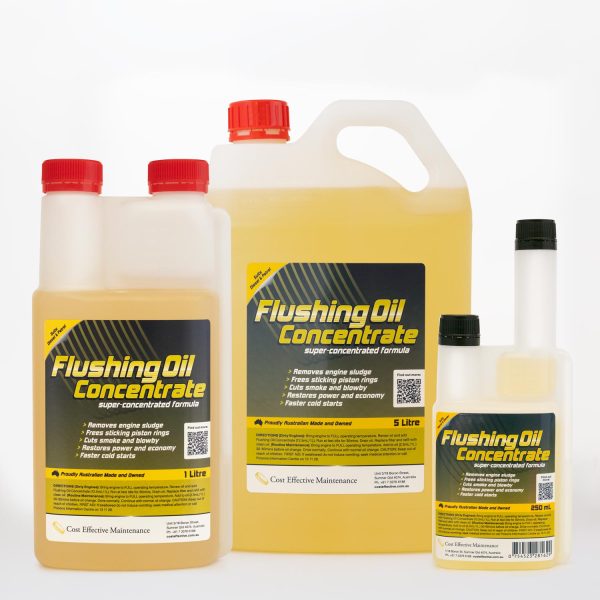
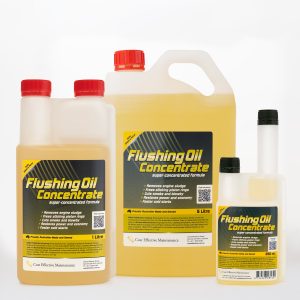

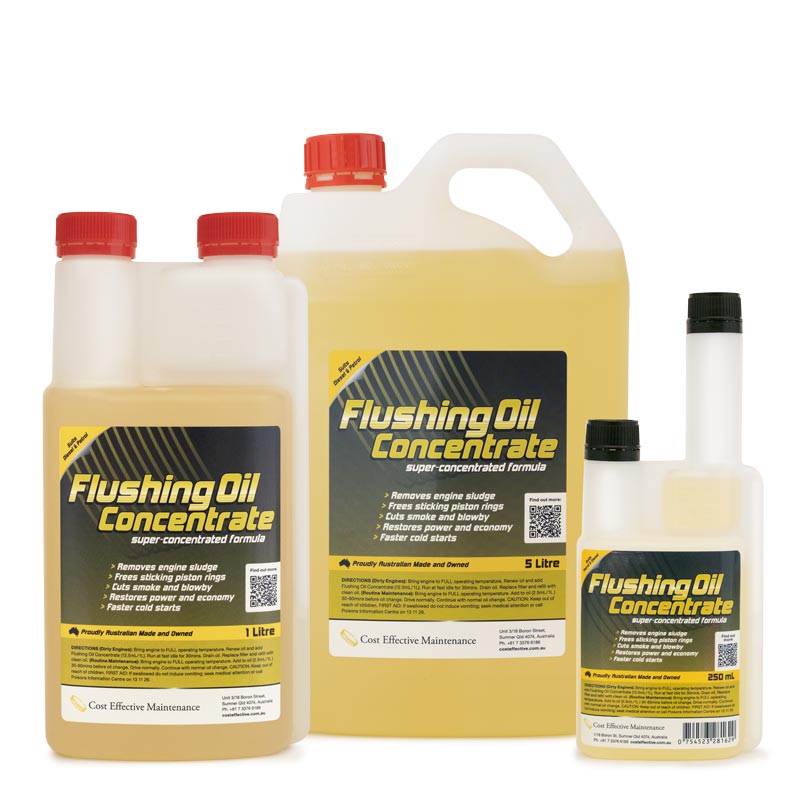
Flushing Oil Concentrate for Diesel and Petrol Engines
From $115.00 incl. GST
Designed to restore cleanliness to the dirtiest petrol and diesel engines, this powerful engine oil flush helps remove sludge buildup, harmful deposits, and contaminants from critical engine parts. Flushing Oil Concentrate has saved many thousands of engines from expensive rebuilds. It is a smart preventative maintenance solution for all engine types because it:
- Removes engine sludge, varnish & hard carbon deposits
- Frees stuck piston rings and improves compression
- Reduces smoke, blowby & oil use
- Restores engine performance and efficiency
- Prevents diesel engine oil going black straight after an oil change
- Is suitable for petrol, diesel engines, transmissions & diffs
- Description
- Reviews (99)
- Instructions
- More Info
- Case Studies
- Video
- SDS
Description
Flushing Oil Concentrate is a detergent-based engine oil flush for petrol and diesel engines. Added to the oil before a change, it removes sludge, varnish and hard carbon, frees stuck piston rings and restores compression. It is safe for seals, and suits engines, transmissions and hydraulics. A 250mL bottle treats up to 20L of oil (125mL per 10L for the first flush), and it has saved engines from rebuilds costing $4,000 to $200,000.
Sludge quietly kills engine performance. Because modern engines run hot with long oil-change intervals, deposits build in ring grooves, galleries and oil coolers. Many engines that seem worn out are just dirty inside. The Flushing Oil Concentrate engine flush is a detergent-based clean-out for the entire crankcase.
It is not a harsh solvent flush. Instead, purpose-specific detergents lift sludge, varnish and hard carbon safely, without attacking seals or O-rings. As a result, stuck piston rings free up and oil circulates properly again. Blocked galleries clear, and the whole crankcase returns to pristine cleanliness.
It also pairs with FTC Decarbonizer as our two-step engine blowby treatment. Around 80% of treated engines recover compression control and eliminate blowby. In addition, the Flushing Oil Concentrate engine flush keeps fresh oil cleaner for longer, so diesel oil no longer turns black straight after a change.
Use it when your engine shows:
- Black oil straight after an oil change
- Blowby, smoke or rising oil use
- Stuck rings and compression loss
- Sludge, overheating or oil-pressure problems
Dosing is simple: 125mL per 10L of oil for the first flush, then a small keep-clean dose before each change. Because rebuilds cost $4,000 to $200,000, run the Flushing Oil Concentrate engine flush before you strip an engine.
Effective engine oil flush and sludge remover
Designed to restore even the dirtiest petrol or diesel engine, this advanced engine oil cleaner works as a deep engine clean solution that clears blocked oil passages, removes sludge formation, and flushes out contaminated oil.
Many vehicles that appear worn out are actually suffering from sludge buildup, dirty engine oil, and restricted oil flow. This engine oil flush is circulated through the motor during an engine run. In doing this, it breaks down harmful deposits, dirt, and contaminants before you drain the old oil and replace it with fresh oil and a new oil filter.
The result is a clean engine filled with clean oil that enables smoother operation, reduced wear, and improved overall performance. It’s suitable for diesel and petrol engines, including older engines running on mineral, semi-synthetic, or modern oils.
Customer experience using our effective product
We have been using this flush for a considerable time in some of our older 12L Macks and Series 60 Detroit Diesels, and with great success. They had developed a fair bit of blowby and were using more oil. We find that using engine oil cleaner reduces blow-by and oil use in these older engines. We’ve even had engines with 2 million kms respond well to the Flushing Oil Concentrate. Mack & Detroit Fleet: Mark James, Wellmix Pty Ltd
Peter had spent thousands of dollars replacing radiators, clutch fan hubs, thermostats, chemical cleaning, and more, but nothing solved his overheating. Over three years, it kept getting worse, with the temp gauge sitting 3–4mm above the halfway mark. Every time it ran hot, the air conditioner would cut out.
After a web search found reports of this problem being solved, Peter finally tried the Flushing Oil Concentrate & Cleanpower pack. The overheating problem was solved: he now runs at 110kph uphill, towing the quad bike trailer, and the temp stays cool. Peter also reports that the oil was amber clean on the dipstick after his first flush. In the past it had gone black straight away. Nissan 4.2TD Patrol: Peter Simms, Humpty Doo NT
A real-life fix for sludgy diesel engines
Flushing Oil Concentrate is a proven solution for restoring performance in midlife and older engines affected by sludge, varnish, and harmful deposits. It works across all lubricated engine parts, transmissions, and hydraulics to deliver a complete engine clean. It clears:
- Dirty black oil and used oil contamination
- Stuck piston rings and compression loss
- Heavy sludge buildup and carbon deposits
- Power loss and poor fuel economy
- Excess oil use and diesel smoke
- Rough idle and starting problems
- Overheating and blowby
This engine oil flush removes sludge and harmful deposits. It also frees internal components and improves oil circulation. Once drained and refilled with new oil and a fresh filter, the engine runs cleaner, cooler, and more efficiently.
- Removes sludge & hard carbon
- Frees sticking piston rings
- Cuts smoke, blowby & wear
- Restores power, economy & engine life
Regularly using this engine flush as part of your maintenance routine will help extend engine life. It will also reduce the risk of costly damage, and improve long-term reliability.
Our Flushing Oil Concentrate has helped customers save significant money on rebuilds (from $4,000 to $200,000) by restoring engines instead of replacing them.
It’s economical and easy to use — just one 250mL bottle treats a typical 4WD engine and keeps it clean for multiple oil changes.
To achieve the best results, we recommend adding the product to your existing engine oil. Allow the engine to run, then drain and refill with good oil and a new oil filter as part of your next service.
Experience the benefits of a cleaner, safer, and more efficient engine by ordering Flushing Oil Concentrate today.
99 reviews for Flushing Oil Concentrate for Diesel and Petrol Engines
Add a review
How to perform an engine oil flush?
If you change your own oil you can do it, because that’s basically all there is to it.
The first time you use a flushing oil concentrate, it just requires 30 minutes of fast idle on clean oil with FOC to restore pristine cleanliness to the entire crankcase.
Once you’ve restored cleanliness, you just put a very small amount in the old oil before each oil change. At around $5 per change for a Hilux, it’s so very cheap to use!
Do this every time you change the oil, and your engine will never again become gunked up.
Six easy steps to flush a diesel engine
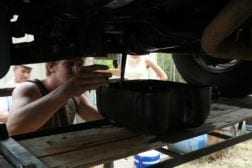
Step 1. Drain the old oil out hot. That way you remove as much contaminant as possible first up & you get the best possible clean up result. Matt shows us how on his 1998 Hilux 3.0L diesel, which has 268,000 kms on it.

Matt just purchased the Hilux, and the dealer had changed the oil about 500 kms ago.
Just look how filthy it has become in such a short time! It’s pretty clear that this oil would not last its full service period. It would stain your hands by 1000kms, from my experience…and if it stains your hands, it can’t keep the engine clean!!
Step 2. Add fresh oil to the engine. You can use a cheap oil for this part of the job. Run the engine to warm up the oil, and then add the Flushing Oil Concentrate (125mL for 10L oil capacity).
The Hilux takes 6 L oil, so Matt added about 75mL Flush. When doing a diesel engine flush Landcruisers and Patrol 4.2L diesels need 125mL for a 10L sump.
Series 60 Detroits need 500mL for 40L sump.

Step 3. Run the engine at a fast idle parked up for 30 minutes. For most 4x4s, this means 1500-2000rpm. For Larger truck type motors (eg Series 60 Detroits, Cats, Macks, Cummins, etc), run at about 1200 RPM
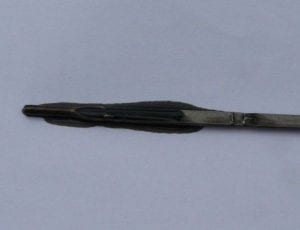
Well, brand new oil and Flush, and see how it looks after 30 minutes. It’s picked up all the old persistent sludge from around valve gear, oil galleries, etc, and hard baked on carbon from piston ring grooves, skirts, oil coolers etc.
Black oil instantly! But the engine crankcase (the oil wetted side) is now very clean!
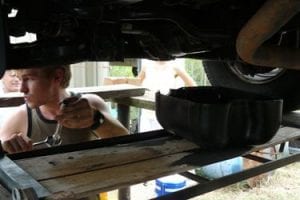
Step 4. Drop the oil again, and watch all the build up muck go out with the flush.
Step 5. Add a good quality engine oil and new filter, and it will now easily last for the whole recommended oil service period.
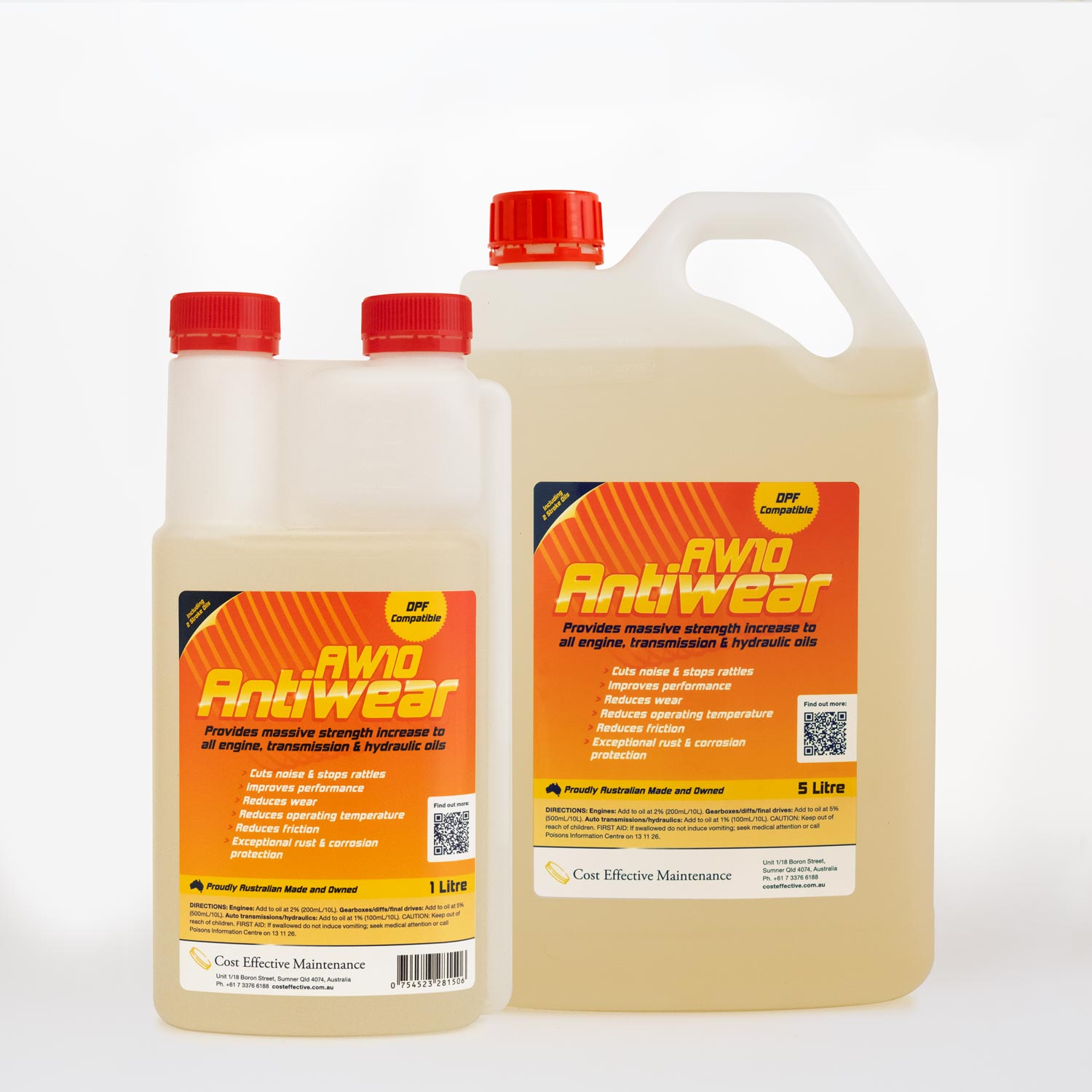
This is also the perfect time to add the AW10 Antiwear to the oil for added protection, and quieter running. Engines love our AW10 Antiwear! They rev more freely and run so smoothly and quietly…it’s a good feeling!
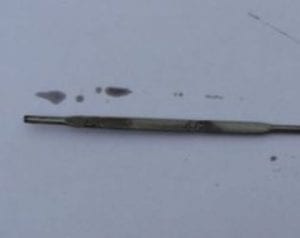
Step 6. As a final check, make sure there are no leaks, take it for a quick run and recheck the oil level.
In Matt’s case, he found it very difficult to even see the oil on the dipstick. That’s it on the left. It took a few attempts to even photograph it properly.
Once you’ve got it clean, just put a small amount of FLUSH in the old oil 30 minutes before you drop it out. For the Hilux, that’s a mere 15mL an oil change. Our Engine Flush additive is so cheap and yet so effective!
In the Mid 1980s we identified the almost universal problem of very high oil soot, with small pre-combustion type diesels (e.g. 4x4s). That is, the oil gets black very quickly compared to direct injection diesels (like most large truck types diesels). Many 4×4 owners comment…”All diesels have black oil, don’t they?”
The problem is the black oil totally loses its detergency (it stains everything it touches then). Engine problems develop such as engine sludge and stuck piston rings, which causes oil use, engine compression loss, power loss, high fuel consumption, oil pressure problems, engine start problems, blow by AND even chronic overheating. That’s right, one of the oils 5 duties is to cool the engine, but it can’t do this if engine sludge restricts oil flow or the underside of pistons are coated in muck! Many modern petrol engines are now also very prone to sludging up severely.
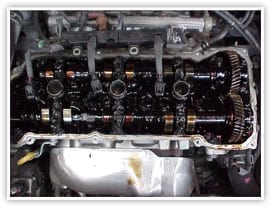
It wasn’t until the early 1990s that our search for a solution was finally rewarded. Our diesel engine oil flush is formulated on purpose specific detergents (not solvents that can cause problems with oil seals, O-rings, and even a crankcase explosion!)
Engine Oil Flush enables owners to restore full cleanliness to their entire crankcase, removing all engine sludge and freeing stuck piston ring deposits.
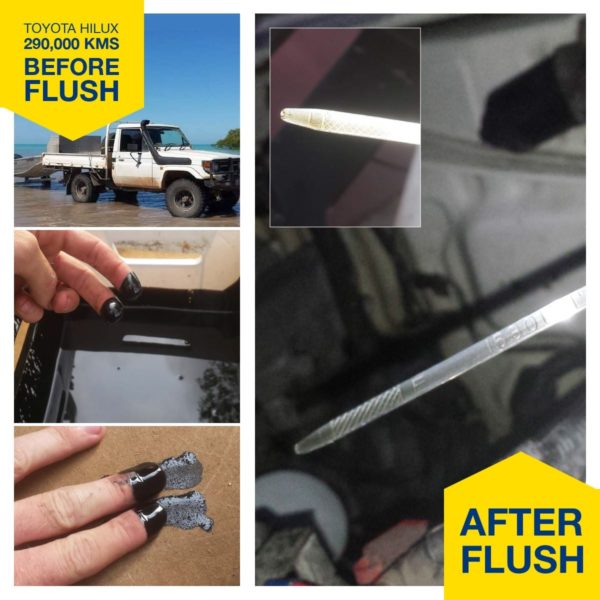
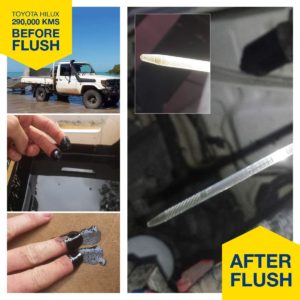
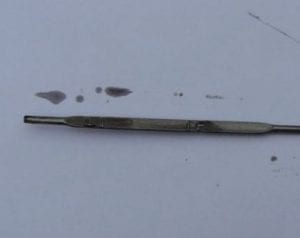
How good is it? People with very dirty, thickened oil (even as soon as it is changed) often report back that the oil is so clean, they can’t see it on the dipstick. The photo below is after flushing a 3.0L diesel Hilux with 268,000kms. Normally after a service, this engine would have jet black oil straight away on the new oil. Here’s the proof…
Nowadays, a lot of modern low emission truck diesels e.g. Detroit Diesel Series 60, Cummins M11 and Signature engines, Caterpillar 3500 series engines, old Perkins, Detroit 2 strokes, Hinos, etc that can suffer sludge problems join the ranks.
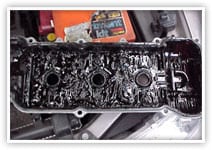
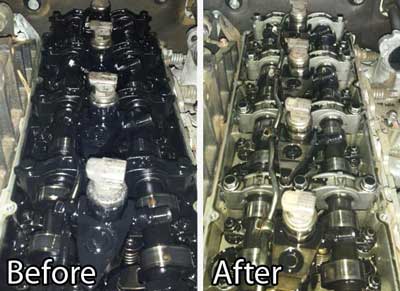
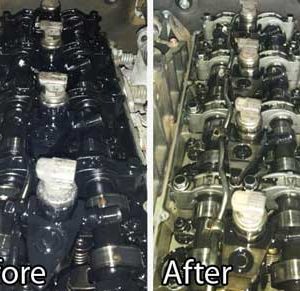
Also plenty of modern petrol engines now have sludge problems due to running higher operating temperatures and longer oil change intervals. That rocker cover on the right is from a V6 Camry motor. Many sludge reports also come in concerning Avalon, Lexus, VW, BMW and in fact most modern petrol engines, since they run higher operating temperatures are more susceptible to sludge. Many car hire companies turn their fleet over so early, that they never bother with oil changes, so engine sludge build up is inevitable.
Engines not used for months, even years? Overheated engines?
In most cases the rings will be stuck since any carbon present has dried out and hardened. Well, Flush will even dissolve that and free them up again.
How much Engine Flush do I need?
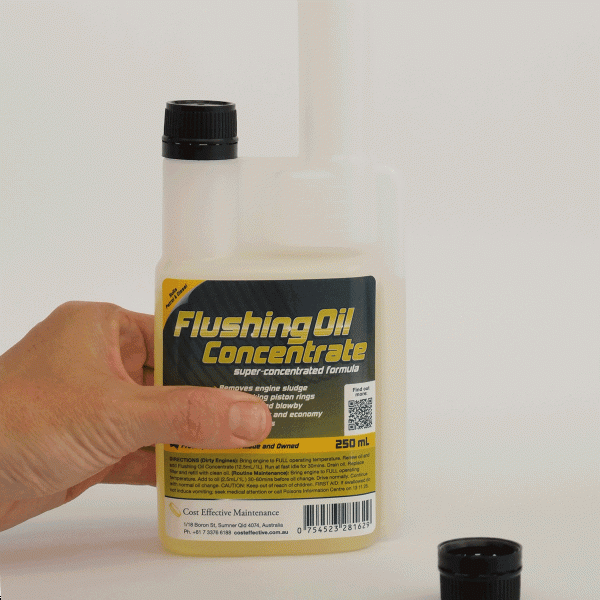
4×4’s and light vehicles. The small (250mL) pack will do up to 20L of engine oil. Your typical Landcruiser diesel takes 10L oil and would need 125mL for your initial diesel oil flush. (The remainder will do a further 5 “keep clean flushes”)
For larger engines, the 1L Flush will treat up to 80L of oil. A Series 60 Detroit takes about 40L oil and needs 500mL Flush. (The remainder will do a further 5 “keep clean flushes”)
But you also need to reduce the production of sludge… You need to clean up the combustion process, so that less soot is produced. Then less soot enters the oil, and sludging is minimised. Either FTC Decarbonizer or Cleanpower in the fuel can provide cleaner combustion. Cleanpower cleans and protects the entire fuel system. FTC provides a direct combustion efficiency benefit.
Mitsubishi Pajero 200,000km
I have used your Flushing Oil Concentrate in my Mitsubishi Pajero with 200,000km on the clock. It was starting to rattle and was getting a bit concerned so I did the full flush. What came out was amazing. The oil had so much crap in it not seen before in any oil change, the engine ran smother and quieter and the car ran much better. I now use it at each 8,000k oil change. Grahame McClenaghan NSW
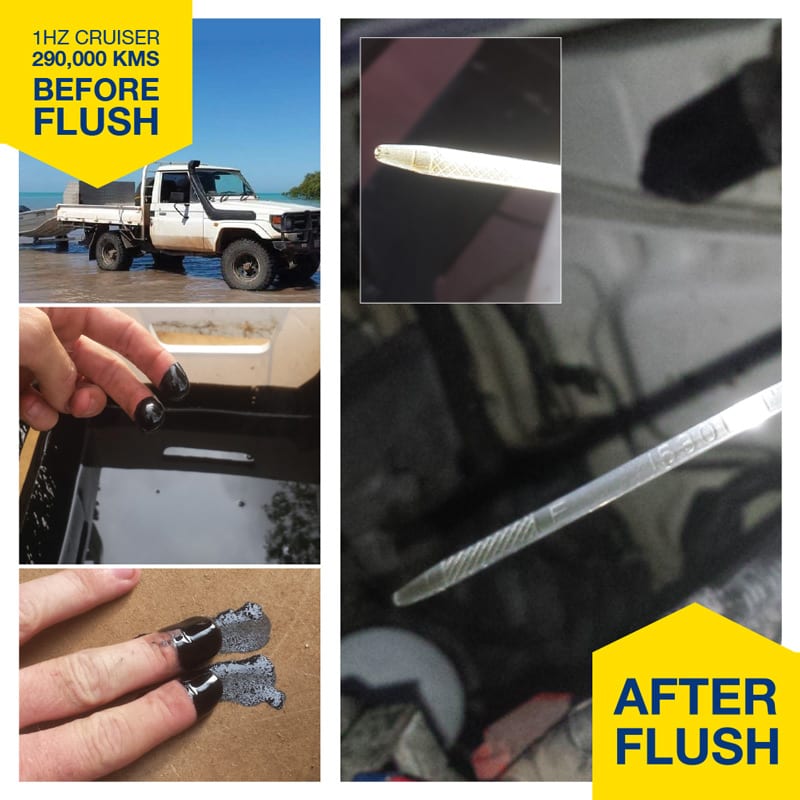
1HZ 290,000km
Check out this incredible Flushing Oil Concentrate BEFORE & AFTER RESULTS, sent into us by Stephan Martineau this week! Stephan’s Toyota 1HZ had 290,000 on the clock and the oil was badly gunked up and black as all hell. After draining his existing oil and performing a flush using our Flushing Oil Concentrate and a batch of cheap oil. After 3 days of running, he couldn’t read the oil on the dipstick it was so clear! Amazing results mate, we’re bloody stoked for you!
2001 TD42 GU Patrol
Since the engine oil flush and oil change I have clocked up to just under 2,000km. My engine has slightly higher performance at 120HP at the wheels; and as you can see I do take good care of my trucks engine; not too bad for nearly 209,000km. I never abuse my engine; I drive it firm at times when the need arises.
So anyway just under 2,000km later I decided to check the engine oil to see how well the flush went. Well when I first pulled and checked the dipstick I nearly shit myself as I thought there was no oil in the system!!! I ran my fingers up the dipstick and to my relief there was oil on it. I was just blown away by how clean the oil was after 2,000km; it was like I had only just changed the oil. Engine oil is still a golden colour, slight soot can be seen.
As you see in the photos there is a slight amount of contamination in the oil; but nothing like all the oil changes in the past, well done guys…

Daniel Taylor
ROCKINGHAM WA
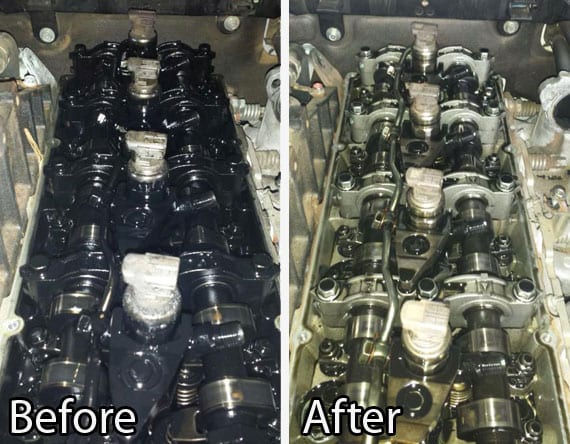
NS Mitsubishi Pajero
Properly the best before and after shots on a NS Mitsubishi Pajero, The dirtiest 4M41 motor I’ve seen inside and the 1st and still only timing chain problem I’ve had in the 8 years I’ve been here. Flushing oil did a great job “ Thanks RON Motocare4wd .. www.motorcare.com.au
2011 Camry avoids engine rebuild
Hi, I have been not been a fan of any oil or fuel additives in the past.
Until one day my wife took her 2011 Toyota Camry to her Toyota dealer for a service as it was 1-2 months overdue. The car had done maybe 45K and not very hard K’s at that. It was running like a pig when she took it to them, she called me that afternoon and told me the car was stuffed and needed a new engine.
As soon as I picked myself up off the floor I called Toyota to enquire what they thought the problem may have been. They told me that there had been a bad batch or poor quality oil put through the engine and had caused the engine to fail because of “blow-by” and ring freeze.
Not knowing too much about cars and stuff mechanical, I asked a mechanic friend to have a look. He pretty much confirmed that the engine was “gunked up” and would need to be pulled down. He tested the compression and told me it was very poor in two of the four cylinders.
After doing extensive research on the same issues via the internet I came across Cost Effective Maintenance. I read their stories with doubting belief but thought “what the hell can I lose” so I ordered some of the products like the engine flush and the FTC and clean power. After using these products and changing the oil monthly for 3 months the engine made huge improvements. It was idling and not stalling when in reverse, so I kept doing what I had been doing. In 6 months the engine was back to “normal” and I have since stopped the oil changes. The oil is absolutely spotless now.
But I do keep including the two additives into the fuel at every fuel fill.
I have suggested to the good wife that she might want to run as low as possible before refueling ensuring the right dosage is maintained.
Well, since taking the car to Toyota and being told we need a new engine, we have persisted with the additives and we are now experiencing better economy than before. We once thought the Camry was quite economical at 550K’s per tank, but since the CEM products added to the fuel we now get over 600K’s per tank and depending on the run even more.
Needless to say I have boasted the outcome to my brother and father, who are now both converts and advocates of these great products
Kind regards
Ivor Godsell (Melbourne)
1990 Nissan GQ Patrol 4.2 Diesel
Just wanting to give you guys a round of applause for the difference your products have made to our old 1990 Nissan GQ Patrol 4.2 Diesel.
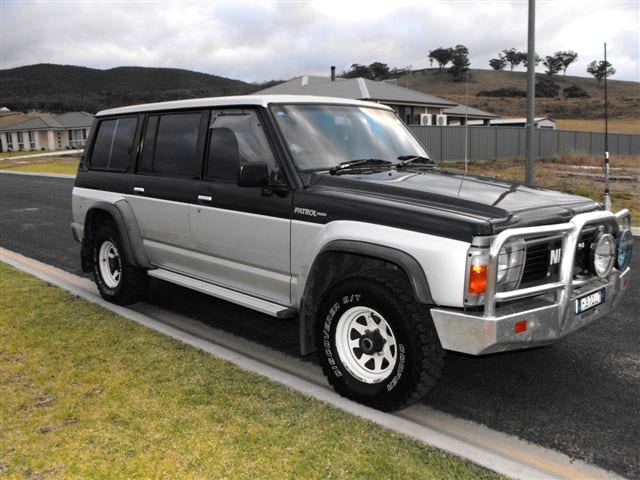
The Flushing Oil Concentrate, sheer magic, the oil is now a clear honey colour on the dipstick and black smoke has been improved by about 75%, she still blows a little puff of smoke under hard acceleration (well as hard as a 4.2 Diesel Patrol can accelerate anyway!), but I have no doubt this will improve even more with the use of the Cleanpower Fuel Treatment and FTC Decarbonizer (still on the first tank of fuel since adding these two elements to the fuel), but I will keep you posted on this. Instantly noticeable is the increase in oil pressure and the lower temp she now runs which is a godsend because she was starting to get a little hot under the collar on hot days and longer inclines.
As a point of interest for you, I followed the instructions for the FOC and drained the original oil hot, refilled to manufacturers specs of 9.2 litres of oil and added the prescribed 125ml of FOC and when I dropped the oil after after the 30min high (1250rpm) idle I drained an incredible 14.7litres out of her, and after just 5mins the idle had gone from 1250rpm to over 1500rpm and was still climbing, forcing me to reset the idle back down to 1250rpm!
The AW10 Antiwear has improved the gear changes in the old girl out of sight, what used to be a belligerent SOB when cold is now slicker than a Parramatta Road used car salesman it has also reduced the rear diff’s very slight whine to less than a whisper, to say I am wrapped with the result thus far would be a gross understatement. It seems to have made the old Patrol alot smoother altogether mechanically.
My wife who drives the Patrol the vast majority of the time is really impressed with the results too, so on behalf of both of us I want to thanks, and you can be assured we will be talking up the benefits of your excellent products for many years to come.
Warm regards,
Shane Cusack
Mudgee NSW
Mack & Detroit Fleet
We have been using the Flushing Oil Concentrate for a fair while now, in some of our older 12L Macks and Series 60 Detroit Diesels, and with great success. These engines had developed a fair bit of blow-by and were using more oil. We find that using the Flushing Oil Concentrate reduces blow-by and oil use in these older engines. We’ve even had engines with 2 million kms respond well to the Flushing Oil Concentrate. (Mark James, Wellmix Pty Ltd)
1995 Nissan Patrol 4.2L Diesel, with 386,000 kms
It overheated every time I turned the air conditioning on. I have replaced the Radiator (Twice), the Fan Hub (Twice), numerous thermostats, the water pump, had the cooling system cleaned out and new batteries almost 6 monthly…but no joy!
Then, one day at the doctors surgery I saw your ad in 4WDAction, and ordered a pack of Flushing Concentrate and fuel treatment. I took the Patrol to my mechanic with instructions to follow. He dropped the oil hot, and then added fresh oil and the Flush. He then set the hand throttle at 1250RPM and let the patrol idle away. After 20 minutes, revs increased to 1650RPM. Some 2L or more of sludge was flushed out, judging by the volume of dirty oil removed.
A good quality diesel oil was then added with the AW10 Antiwear additive. Leaving the garage, I put the air conditioner on and drove off up a long climb that always caused my truck to get very hot (without the air). This time, I noticed that not only did the temperature remain well within the operating range, I had also “Picked up a Gear”. The patrol was running as good as I have ever seen it.
Even running a long steep climb up the Calder Highway, with a tandem trailer and the air on, temperature stays well down.
The other improvement is the starting. I used to have problems, particularly on cold mornings, but now it starts first kick, never done that before.
Bill Hayes
Blaze Control Bushfire Sprinkler Systems
1984 NISSAN Patrol 3.3L Diesel
Thank you! I wish I’d used your product a lot sooner, as it has made such a big difference to my Nissan Patrol. It has 372,000k’s on the clock, but is now running as if it has a new motor. It is starting easier, and running smoother and quieter than it has in the 21yrs that I’ve owned it. Thanks again, Tony Edwards.
Detroit Series 60
Truck fleet owner, Merv Sweetman had done 500,000km on this engine with no problems, when it suddenly started fuming badly, and started using oil at the rate of 6-7 L in 2 days. After inspecting the engine, Detroit people concluded that it needed a rebuild at a cost of $14,000. On advice from Cost Effective Maintenance, he started using FTC Decarbonizer and Flushing Oil Concentrate on a regular basis. Performance, oil control and blowby control quickly returned to normal. Now 110,000 km later, the truck is still running better than ever and no oil consumption. His Cat engines are also running better, and the oil in them stays very clean right to the change interval.
Land Rover County 110 4×4
I put flushing oil concentrate in my county 110 @ 400,000 km, and it has done an amazing job! Motor is running smooth with an increase in power of 40%. I was extremely sceptical as a mechanic, this has saved me 1000’s$ Have looked at your product for many years, never had the guts to try it, but boy you have won me will recommend this product to any one. A huge thankyou!!!!!!!!! (David Woods)
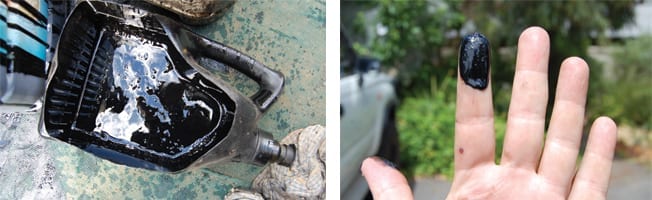
Landcruiser 1HZ diesel (1994)
Hi Jimmy, I would like to say thankyou for the extra bit of engine oil flush. I ran the flush thru the old girl with 9 litres of clean oil for 30 mins as directed. Well over 11 litres of black gunk came out. I was totally blown away by the sludge in the bottom of the Drain Pan. I’ve added a couple of pics for your website and feel free to use my above testimony of the result. I must say my Family were impressed and will more than likely be placing an order themselves.
Once again thanks Evan yates
Landcruiser 2H Diesel
Some feedback, I have a modified 60 series Landcruiser 242,000k. Runs a 2H with turbo and have experienced some overheating problems when towing. Replaced radiator with Heavy Duty and still existed, whilst the main problem was tuning this was fixed by Brisbane Turbo and Tuning Centre. I also decided to flush the motor using your product. I was amazed by the amount of build up that came out, almost double the oil I put in. The oil is cleaner on the dip stick now. I also added the AW10 Antiwear and using the Cleanpower fuel additive and the truck is running quieter and much more responsive. All in all worth doing and I will continue to use in future. Cheers!
Nissan Patrol 2.8L TD
I used the Flush to your instructions, and couldn’t believe the sludge that came out!! The motor is now running a lot smoother and staying much cooler under heavy loads now, eg towing my 2 tonne horse float. Fuel consumption has also improved, but it is too early to confirm the figures yet. Les White, Heartland Real Estate GIN GIN.
Ford Festiva, 300,000kms
John Summers (Pomona) resurrected this sad old girl, and reports that Flushing Oil Concentrate cleaned it out well, and cylinder compression rose from 60psi to 100psi in the weakest cylinders.
1983 MQ Nissan Patrol
My 1983 MQ Nissan Patrol SWB, that I affectionately call ‘half-a-mongrel’, had 346800km’s on the clock when I put in the CEM Flushing Oil Concentrate and Cleanpower Fuel Treatment four weeks ago. Since using it, the old beast has done approximately 1200kms and really has a new lease of life. It was smokey, noisy, smelly, lacking power and using excessive fuel.
The difference is astounding. The plumes of smoke have gone. It doesn’t use the copious quantities of oil it was using. Hills that I used to have to change back to 3rd gear to get up at 60kms, I now cruise up in 4th at 90kmph+. I can now hear my radio over the engine noise. The fuel consumption has improved by approximately 20%!
I can’t wait to send you some before and after shots, you’ll be as amazed at the difference as I am. CEM products are extraordinary.
Which brings me to the reason I am writing. Should I use AW10 and/or FTC Decarbonizer now on this old ‘half-a-mongrel’ of mine? The attached photo shows you what it used to look like driving under load. That’s exhaust smoke, not dust! I am going to take it for a run up the same hill to get a new photo to compare. It won’t be anything like that.
I am sincerely impressed with your CEM products.
Datsun SD25 Diesel
For 4 years, Allan Dickson had been unable to solve an overheating problem. Despite flushing the cooling system, and fitting a larger radiator, it would always boil up the Toowoomba Range. After using FOC, it gets up the range at 70 kph (instead of 40-50 kph) without overheating. One of the functions of oil is to cool, and if flow is restricted, overheating results.
Daihatsu Rocky turbo diesel
FOC acts by cleaning the piston rings, to allow full compression to be restored. Even at 34,000km compression loss can occur.
Cyl #1 Cyl #2 Cyl #3 Cyl #4
34,000 kms 400 psi 390 psi 390 psi 400 psi
119,000 kms
(After FOC) 460 psi 440 psi 440 psi 450 psi
Nissan 4.2TD Patrol
(Peter Simms, Humpty Doo NT). Originally never ran hot, but in recent years it had become a problem. Peter had spent thousands of dollars replacing radiators, clutch fan hubs, thermostats, chemical cleaning, etc, etc…all to no benefit, as nothing solved his overheating. In fact over the last 3 years, it just got worse & worse. The temp gauge would sit 3-4mm above the ½ way mark. Every time it ran hot, the air conditioner would cut out. After doing a web search, and finding reports of solving this problem, Peter finally tried the Flushing Oil Concentrate & Cleanpower pack. The overheating problem was immediately solved. Now at 110kph uphill, towing the quad bike trailer, and the temp stays cool. Peter also reports that after his first flush, the new oil was amber clean on the dipstick. Normally it went black straight away.
1990 2H Landcruiser Diesel
With 233,000km, top speed was 100kph, and I could only get 2000rpm flat to the floor. After following instructions for flushing the engine, it now spins to 3000rpm quickly and is gaining. Top speed is now 122kph, with more power down low, and revving out nicely through the gears. You’ve saved me from selling the Toyota, as I’ve had enough of pulling engines down in the last 30 years of 4WDing.
Hydraulic tappet noises
Robert Eckel Repairs (Charleville) use FOC to successfully reduce hydraulic lifter noise in customers vehicles.
Ray Borg
“Best engine flush in the world!” The first bottle worked wonders on the sludged up old VK Commodore, which had lost all oil pressure. It removed 6 litres of sludge. Everyone’s car I’ve used it on calls it “the magic potion”. Now the word is spreading, so could you please send me two more bottles? I can’t thank you and C.E.M. enough for your assistance and valued advice. The product is 100% true to its name!
Mazda T4100s
Best Practice Constructions run two of them. After flushing the engines with FOC, the mechanic was amazed at the amount of rubbish that came out, and even more amazed at the change in performance. “We’re getting a lot of positive feedback from our crews, and so far it’s been a cost effective solution.
Paul Mitchell
“Just thought I would drop you an email. I bought your twin products in September. I have a Nissan GU Turbo diesel Patrol which has travelled 228000 klm. It has had regular oil changes every 5000 klm. Yet the oil was always thick and ‘goey’, even after an oil change. I have now used your product twice, the first time the oil was a little cleaner and not as thick. I did another oil change after about 2000klm. This has really cleaned out the dirty oil. It is now so clean I cannot even see it on the dip stick. Well done on a product that really works. I am sure my turbo is really appreciating the new clean oil.”
Nissan Patrol 4.2 Turbo Diesel
At 190,000km, it had a rear main oil seal leak, and heavily sooted the oil when changed. After flushing with FOC, the oil leak stopped. (The problem was sump pressure from fouled piston rings.) “I now flush every second oil change and use Cleanpower every tankful. As a mechanic, I was skeptical, but am amazed at the results, and now a totally dedicated user.
Kenworth/Detroit Diesel Series 60 (475HP)
Like many modern truck diesels, these are prone to sludging up badly. FOC was run in the oil for 40 minutes before draining. From that point, the power and economy improvement was most noticeable. Fitted with oil centrifuges, about 1 cm depth of dirt would be collected at each service period. However, after the flush, there was no centrifuge dirt at all, indicating less contaminant blowby.
Navara Diesel
was so gutless, it would be down to 2nd gear on the range, with a cloud of smoke behind it, and it wouldn’t hold 5th gear on the flat. After using FOC and Cleanpower, it gets up the range in 4th gear (no smoke) and accelerates in 5th gear on the flat. Les says, “I was close to putting a match to it, but now it really is such a pleasant thing to drive again!
Landcruiser 1994 Troopy diesel
After using FOC and Cleanpower fuel treatment, the Troopy pulls an extra 200-300RPMs on my test hill.” Says Rob Leighton.
Watch how an engine oil flush with Flushing Oil Concentrate restores a sludged diesel.
Click here to view the Material Safety Data Sheet
Click here to view the Product Download Sheet


brian Cottell –
Top Stuff, it works !
Paul Pearson –
Good value and quality still got to try it but it looks good
Aussie –
Works well great product
Robin Benson –
Awesome, …
stOrmzy –
Easy to use and worked really well on my iseki E3112
Sami –
I used it for flushing engine oil of Hyundai Santa Fe 2007 Diesel for a total of 3 times and each time, I used 5 L new oil and 80 mL of the Flushing Oil Concentrate. Running engine was as per guidelines of the product. At the end of 3 rinses/runs, I was still getting a lot of carbon in. the drained oil. I wasted money as I purchased 250 mL of this product for a discounted price of $103. I should have purchased an engine flush from car autos.
Peter –
I saw results in a mn triton with 440k on the clock. It was slow to build oil pressure but after using the engine flush the oil light is off in a second and not 4
Jeremy Hill –
Amazing product, performs exactly as described. I have been using it for years.
Chris King –
Used it for many years, seems to work well and is economical compared to single dose products.
martin mckinney –
I cant believe an additive can be so effective. My oil went from sludge to clean with one flush.
Darren Bird –
Would not use anything else. Incredible first results. Use it on multiple vehicles. Recommend to all.
Piotr Piskula –
I like it because it’s working !!! This is the whole idea of purchasing it !!!
Wally Mendan –
Did a double flush after about 400km still pretty clean for a diesel
MARK PETTIFORD –
Puchased as part of “ Blow By Kit”.
Followed instructions with my mechanic present. No apparent impact so far. Plan to take it for a run and see if any further impact is evident.
Greg –
It has worked a treat. Price wise its a bit hexy for 250mls.
Romelito Vicedo –
The product works really well
Robert Turner –
Oil stays clear in my old (2005 400km) engine for 500-800 kms
Ivan Tan –
My hilux has done just over 390,000km, I’ve used engine flushes before but decided to give this brand a go. With others once you run the car the oil on the dip stick turns black.
I’m blown away with the results from the concentrated oil flush, the oil in my car after 100km of driving still comes up clean on the dip stick. I have never had such results.
The only thing I did differently from the instructions was to run a new oil filter during the flush process.
Thank you
Greg –
Have only just used product
Raymond Heawood –
Great product, actually works unlike most engine oil flush treatments.
Leah Ormsby –
Really cleans out the oil! My partner said it’s working. I have an Audi 2 let, it has a big oil problem and he added the concentrate, it really cleaned out, that we had oil leaks, I guess that’s a clean out.
Joseph Iturra –
Very easy and safe to use and it does what it’s supposed to do.
Gets the engine clean and ready for fresh new oil .
Ian Vanderland –
Great customer service
Ernest Thrush –
My recently purchased tractor with a 4.2 litre Perkins engine had massive blow by, so severe that the previous owner fitted a 3 metre extension to the breather pipe to avoid the fumes. After dosing with the Flushing oil concentrate as per directions, the blowby has been reduced by 2/3.
It is still excessive, but this experience confirmed my suspicion that the primary cause is glazed bores, and will hopefully respond to further treatments down the track, along with constant use of FTC Decarboniser
Andy Nicholls –
Dunno yet. Just used it for the first time yesterday. Give me a few weeks and then let ya know
Shay –
Almost unbelievable. Td42 200,000km. Purchased wagon and did oil change & filters straight away. Oil went black almost immediately.
Drove for 3 months then come across this product. Changed oil and added the 125ml for 10L of oil. Run for 30mins at operating temp and dropped oil. Also tipped another 2.5L of oil to flush sump.
Oil that come out was super black. Changed filters and added new oil. Dipstick is still clean after 500km as per photos.
Extremely happy, have now ordered some FTC Diesel Decarbonizer, looking forward to seeing how that goes.
Peter Livingston –
I’ve just purchased a 2020 Toyota Hilux with 53k on it,had services done regularly, would it be a waste of time to flush this vehicle already?? Diesel motor has had an easy life.
Alex –
I’ve run this product on my 2005 Toyota Prius consuming approximately 200ml of oil every tank full, this product has made a huge difference to the oil usage as it has barely moved on the dipstick.
I will run again on my next oil change to see whether I can fix it completely, but I am nothing short of amazed.
brian Cottell –
works exactly as described,i have used other products,but this is the best by far,
will keep on using it.
Adam Hubert –
Seemed that the oil looked worse when I drained the engine, will keep using it every oil change or so to see if it clears up (cleaning the motor)
Brian Bowden –
Have used it before and works a treat. This is why I purchased more ready for.my next service.
Arnold Dj –
Really works
Kim Emmerson –
It’s the second vehicle I’ve used this on and will continue to use on other vehicles its amazing how good it works , so easy to use and does exactly what it’s designed to do
David Attard –
Did as described. Pulled out 700ml extra sludge from 7l of oil. Oil is remaining much cleaner.
Adam –
Brought this for my 2013 demax because I had used a cheaper flush that said extreme but after use the oil was black good as straight away but this stuff is magic it worked a treat, I recommend it highly, did a mates patrol excellent result to 👍🏻
Elsha McCombe –
My mechanic said that this worked well when he did my last service. I’ll use it again next service on the advice of the guys when I spoke to them about usage as I don’t do my own servicing. {almost 50 yr. old disabled woman}
The guys were fantastic to speak to on the phone. they were extremely knowledgeable about their products and did not make me feel silly for the questions I asked.
David –
Have a 2011 vw amarok, 3 months started getting hard cold starts and running rough even at operating temps. Thought I’d give this product a shot. Had tried multiple other engine flush brands before this.
Idled the car at 1600 for the suggested 30 minutes. I could hear half way through the engine sound change and ran smoother.
Dropped the oil and got an extra 700ml from 7l of engine oil. Refilled with new oil and already sounding better. Will be using this product for all future oil flushes.
Ian –
I have been using Flushing Oil Concentrate for quite a Few years now with Great Results, It Does everything that It’s Supposed to Do, I don’t know of a Better Product on the Market !
Greg Walker –
Flushed my 1HD-FTE with the Flushing oil concentrate as per the instructions. I’ve driven 600km so far after the oil change and checked my level on the dipstick. The oil is as clean as new! Amazed by this product so far!
Trevor –
I came across this product doing research about my son’s car. I contacted the office and they were very engaging , answered all my questions and they gave me advice on how to use the product.
I used the product exactly how they said on a 2009 BT50 with very black oil even after oil change. The oil left a film in the oil tray.
The end result was great. I pull out the oil stick and it is very clean. Totally amazed and happy with the result.
Highly recommend this product. And thank you to the team for being helpful.
Col Watkins –
Used it in my Toyota Hilux diesel, did a great job !
Owen –
Used the flush concentrate in my 2011 GU Patrol with 200,000kms on it. Super stoked with how effective the clean was. Used this as part of a complete system maintenance with previously using the FTC and CRD additives on the last two tanks of fuel. Engine runs much smoother overall, oil remains clean and as a complete system I no longer have any black smoke.
Well done Team CEM!
Nicholas –
This stuff prolonged the running life of my old GQ to past 600k and multiple laps of Australia. The body rusted out before the engine would fail.
NEVILLE –
Have used this product for over 10/12 years with no adverse effects in my Landcruiser 70
(Diesel ) series. I tow a heavy caravan and change oil every 5 thousand with the Flushing Oil Concentrate.
Steven Jones –
Works great.
Surprising how much gunk came out and how clean the fresh oil looks after the first flush.
Nick Giannikakis –
Very impressed with this engine flush.my oil is still clear after driving over 1000kms.will be using it on all my future oil changes
Neil Cant –
Followed instructions to the letter and the oil stays clear. It used to be black a day or two after after an oil change. It is now as clear as it was when put in a week ago. Can’t reccommend it highly enough.
My Mercedes c200CDI after 13 years and 117,000 km of mainly suburban running was very sluggish with a ckeck engine light permanently on as confirmed by a OBDI test the DPF (Diesel Particulate Filter} was clogged. One tank of double strength FTC Diesel Decarbonizer and the Flushing Oil Concentrate used in an oil change as per instructions and My car is as new. !!!!!!!!!
mark Waldrop –
My diesel engine is a 7.3 power stroke 346,000 miles first time ever flushing and first time ever using cost effective maintenance engine flush. This is the first time and debris and gunk like I’ve never seen before came out. My oil actually stays clean now and this has never happened before. Awsome products would recommend to anyone!!!
Graeme Marshall –
Used for the first time in my TD42 GU Patrol with 308000km on the clock. Have been doing regular oil changes with other brand flushing agents.
This is far more effective, about an extra litre of sludge came out of the engine when draining the fresh oil. The fresh oil that had 30 minutes of run time came out black. Engine runs much smoother now.
Jurgen –
hi, this is THE best engine flush available.i have used others, but they do not work as effectively as this one. even major oil brand ones. the overall saving in oil changes and filters more than covers the cost of using this product.
anton sotiri –
worked very well did exactly what is described and explained to do
Jonathan Rowbury –
Definitely works
mark Waldrop –
Works well cleaned my diesel engine to the point. The oil was 90% clear normally its black within 3 minutes.
joh davidson –
All way use very good cleans engine very well
Tony H –
Totally blown away by how clean my engine and oil now are after having used the concentrated flushing oil.
6500000 k on my 1HZ Toyota diesel and it was filthy and black as midnight.
I was highly sceptical as I’d used other flushes before but now the oil on dip stick is so clean it’s hard to tell if there is any in there! Had to check twice as I simply couldn’t believe how clean it was!
Will definitely be trying out some of the other products.
Travis Berry –
Works really well, used it on an engine before a rebuild and I was surprised at how clean the block and head was
Richard –
I really rate this stuff, i have used it on several engines now and found it works really well, my hilux runs alot quieter now and sounds like new with 333Kms on the clock.
Peter Lotz –
Early days, but the flush certainly removed a large quantity of what appeared to be black sludge. From new oil to black in 30 minutes run time at a fast idle idle. Will need to run up some hours on the motor to determine the ongoing effectiveness.
Robert Armstrong –
Great results
Mathew Pullinger –
Just used the oil flushing concentrate on my diesel land cruiser the results are amazing
I checked the bottom of the oil pan when I drained it and there was the sludge
About half a cup full of what looked more like grease than oil
Now after two hours driving ing the oil on the dip stick looks like honey
I have also been using the fuel enhancer
And the decarbonisation chemical
My fuel economy is about 25 percent better
Great products thank you
Ian Corbett –
There are a lot of products out there that claim to work. Flushing oil concentrate is one product that meets the claims it states. Following the instructions I found it delivered exactly as promised. Oil is so clean that it’s hard to see in photo I took as evidence.
Well done. Delivers 100% on claims.
Robert S –
Used on my 1989 Toyota 4Runner with 325,000km on it. Did a treatment with clean oil, 30 min of 1000rpm idle, oil that came out was jet black.
Look forward to using it on the other cars.
Ray Johnston –
ok good ok good
Sash –
I must say i was skeptical even after reading the reviews on these products. I came across these products while looking up my usual diesel treatment cost at one of the major auto stores. Here I came across a shout out for Cost Effective Maintenance so I had a look. I have a 2015 Dmax which i try to look after the best I can changing the oil and filters every 5k. Even with fresh oil and one time a big brand flush the oil would be black again 2 mins later. After using CEM flush the oil was still fresh after a full tank of fuel.(First oil pic is old oil,second oil pic is the fresh oil with the flush then as you will see after a tank with new oil the dipstick is still fairly clean) I have noticed the engine runs smoother and quieter and the gear changes are also smoother and seem to kick in at the right time. I have since purchased more items, the FTC Decarbonizer, AWD Antiwear and Cleanpower for the petrol vehicles in my household. All the cars seem to be running better now thanks to the CEM products. They are rather expensive but well worth it as you only need a small amount and the benefits outweigh the cost of major repairs.
Daniel Sierra –
Great product, alittle pricey but I am pleased with the results
Rick West –
Pk ford ranger, 220,000kms. I used the oil flush and it has really done it’s job. My oil was usually black within 100 km’s of an oil change. I’ve done 250 km’s since flushing and the oil looks like it’s straight out of the bottle. Very happy with the results so far.
Alan Logan –
This product has cleaned the engine very well, the new oil is super clean on the dipstick now.
Simon Perkins –
My motor was 30,000 over due for a service did the treatment and wow what a difference it made!!
Craig Mence –
Bloody good stuff
Tony Alevras –
Too soon to tell only started using
Ronald –
This product like every CEM product I’ve use is fantastic and does has claimed
David Swindale –
This product is amazing you have to see it with your own eyes to believe it I have a 2015 mn triton 2wd petrol ute ute has nearly 230 000 klms I tried this product with amazing results I drained my old engine oil I only use penrite hpr5 put brand new hpr5 in with 100ml of the flushing oil Concentrate had the ute on 1200 rpm for a hour turned off the ute drained out the oil and what came out you have to see to believe ute holds 4.3 litres of oil 5.8 litres came out 1.5 litres extra the ute has since done 2300klms I average 750klms a week oil hasn’t changed colour since the oil change 3 weeks ago highly recommended this product worth its weight in gold couldn’t be more happier I rate this product 5 out of 5
David Teixeira –
fantastic product really works value for money would buy again
Paul –
Tried it for the first time, worked really well
Vernon Deer –
I’ve used this product many times before on both petrol and Diesel engines. The sludge it removes from my 4.2 D patrol, 3.0 CRD patrol and 4.5 petrol patrol, not to mention my 3.0 V6 petrol navara, is absolutely astounding. No other flush works as good as this does
Alan Uren –
Great products
Warwick –
I now change my oil every 15,000 and to flush each time usually cost over $30
Roger Payne –
First time in years that I have had clean oil after an oil change, normally goes Black straight away does what it says it will do. Great product, and great service from Matt at Cost Effective Maintenance
Rich Muntan –
I have been using it for the last 3 yrs and it really does its job and makes my job easy!!!!
AJ Campers Pantry –
Wow! What a difference this made. We dropped an extra 1.5 litres from our 30 year old 80 Series Land cruiser on the first use. All the black crap stuck in spots and caked in for years was no more. First time I had ever seen the dipstick with clean oil on the end of it. Thumbs up for sure 👍
Darren Woolley –
Did a great job of flushing the engine oil (Diesel) the crankcase is now clean and the motor appears to run quieter and smoother……. although the product Cost is a bit high !!
Jared Nichol –
Awesome product works exactly how it states
Paul Lynas –
Been using for well over a decade on a few different vehicles. Put quite simply, it works, well worth the money, and looks after the engine.
Allan –
Just my opinion. I acquired a Subaru 2005 Outback (petrol) with 350k’s on the clock. Full service history in good order. I was advised the motor was using about 1 litre of oil per 1000kms which I found to be true after buying. Did the full liquid transplant and ticked all the long service items. Changed out the oil twice and decided to utilise the Flushing OIl Concentrate after 10000kms and using lots of oil top up. Followed the instructions and did not get sludge. What did happen was that after I had left the motor to drain over many hours on refill with FS Oil and Viscosity Enhancer was that I had what appeared to be oil smoke out of the exhaust far more than anything I had experienced before. Rang and spoke with the supplier and just continued to drive for a while. The oil smoke diminished over a few weeks and I have driven now about 3000kms and not topped up the oil at all while keeping a constant watch on levels.
I can only explain it in that the settling of the flushing oil given those extra hours sitting at the bottom of the cylinders in the horizontally opposed boxer softened the carbon in the (oil) rings and it burned off on running the motor. There was a small indication of more twitch in the throttle indicating more fuel burn which has now gone back to normal. It is a great relief to know the oil scraper rings are now doing what they are supposed to without a pull down.
I chose to use this product having had success with the de-carboniser many years previously on a large Perkins diesel. I have now utilised the de-carboniser in the fuel mix and the injector cleaner and starting is a little better and the fuel economy is a little better in the Subaru. From 9kms or so per liter to almost 10kms per liter around town.
I broadly think the FOC freed up the rings and allowed the scraper rings to do their job again. Worth it! Relieves the concern of going below the oil level while driving long distances. Subaru now has 365k’s.
Steve –
This stuff is magic. Fantastic product to use before a oil change. New oil that goes in stays cleaner for longer
Peter Bayliss –
Awesome stuff. Put this into my LC200 when I did and oil change. The second oil drop was almost as dirty as the first, even though I had only driven for about 10mins. Definitely got some sludge out of the oil system.
Tom Rogers –
By far the best oil flush I’ve used
Highly recommend to my from professional service centres
Neil –
First time I have used this product. Tried it on the mower first. Had to use Start You Bastard to get it going for years. One flush with the oil flush and it has compression again and starts easy with no SYB. Just done the diesel 4×4 and amazed at the colour of the oil that came out. One thing now I can’t see the oil on the dipstick it’s that clear.😂 Be interesting how long it stays clear.
Brett Howe –
Having used this product on a previous vehicle with great success, I’m hopeful that the current Mitsubishi will respond equally as well – once Covid-19 allows us out to play we will find out 🙂
Steven Targett –
Excellent product i will use regularly
Jose Marie Arellano –
Good product
Cam –
Service and product quality are both top class. Cheers guys
Wayne Murfet –
Does what it says
Jade Fraser –
Awesome products. Used the oil flush product and I recon I got a extra liter out of the oil pan . Oil was black 10 min after driving after services prior . Still gold in colour 2 weeks in . Also had blowby and with using the FTC Decarbonizer is has cleared that up aswell. I had ford tell me my injectors were bad started using the fuel. Enhancer and my compression was restored and I’m not 5k out of pocket with new injectors . This was for a px2 ford ranger . Thanks lads for the great products. Highly recommend
Tom Wolf –
Prompt service, It appears product has increased performance and cleaned out a lot of slug out of the old diesel 👍
Steve Brazel –
Quick delivery, first time user, engine oil flush did an awesome job, still got clear oil on dip stick! usually black straight away, so definitely cleaned up engine. Will use again cheers.
Daniel Kermode –
Tina Arringer –
Howard Sanders –